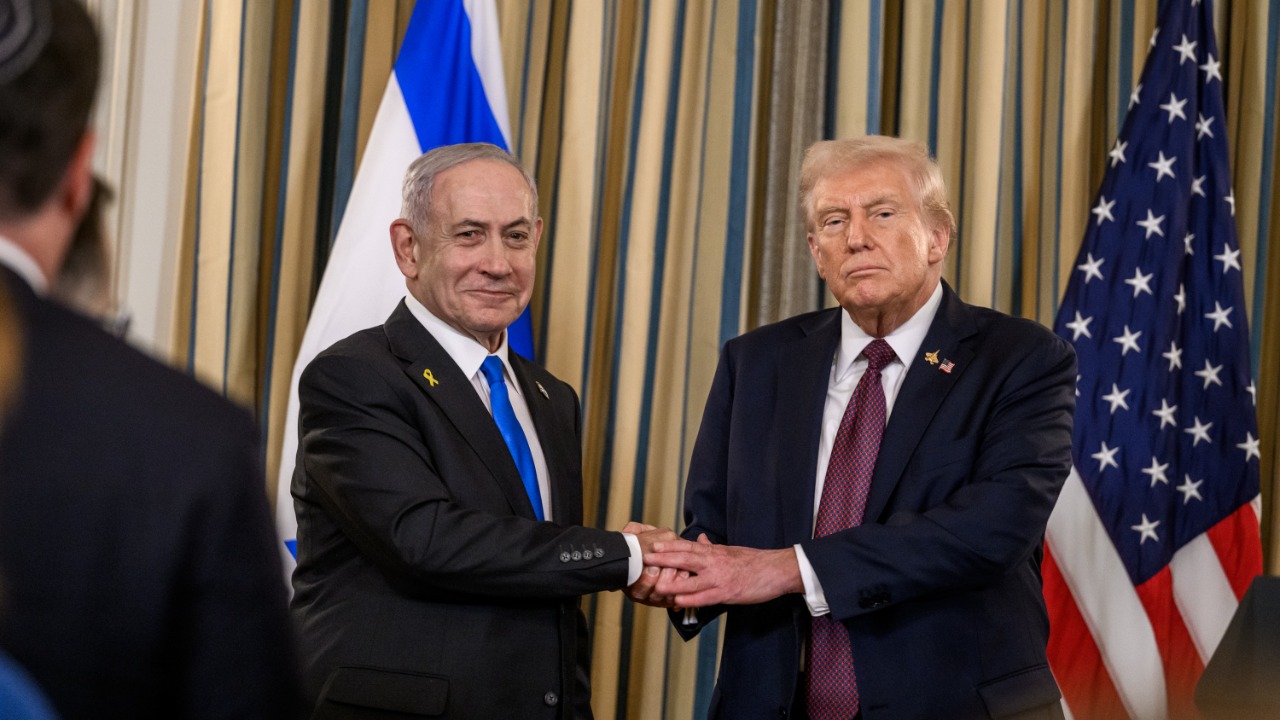
President Donald Trump hosted Israeli Prime Minister Benjamin Netanyahu at Mar-a-Lago on December 29 in a meeting built around one urgent question: whether the Gaza ceasefire could move into a far more difficult second phase without collapsing under the weight of its own demands. The encounter carried the feel of a checkpoint rather than a victory lap. The first phase had created space for hostage releases and a reduction in fighting, but the next step was always going to be harder because it goes beyond stopping fire and into the unresolved fight over who governs Gaza, who secures it, and who pays to rebuild it. Trump made clear at the outset that he did not see phase two as automatic. Asked how quickly he wanted to move ahead, he answered by tying progress to one condition above all others: Hamas had to be disarmed. That framing gave the meeting its central tension. Netanyahu arrived seeking to preserve Israel’s security priorities and avoid a transition that could leave Hamas intact in any meaningful form. Trump, for his part, signaled that he wanted movement, but only on terms that would satisfy that same security test.
Trump turns phase two into a test of disarmament
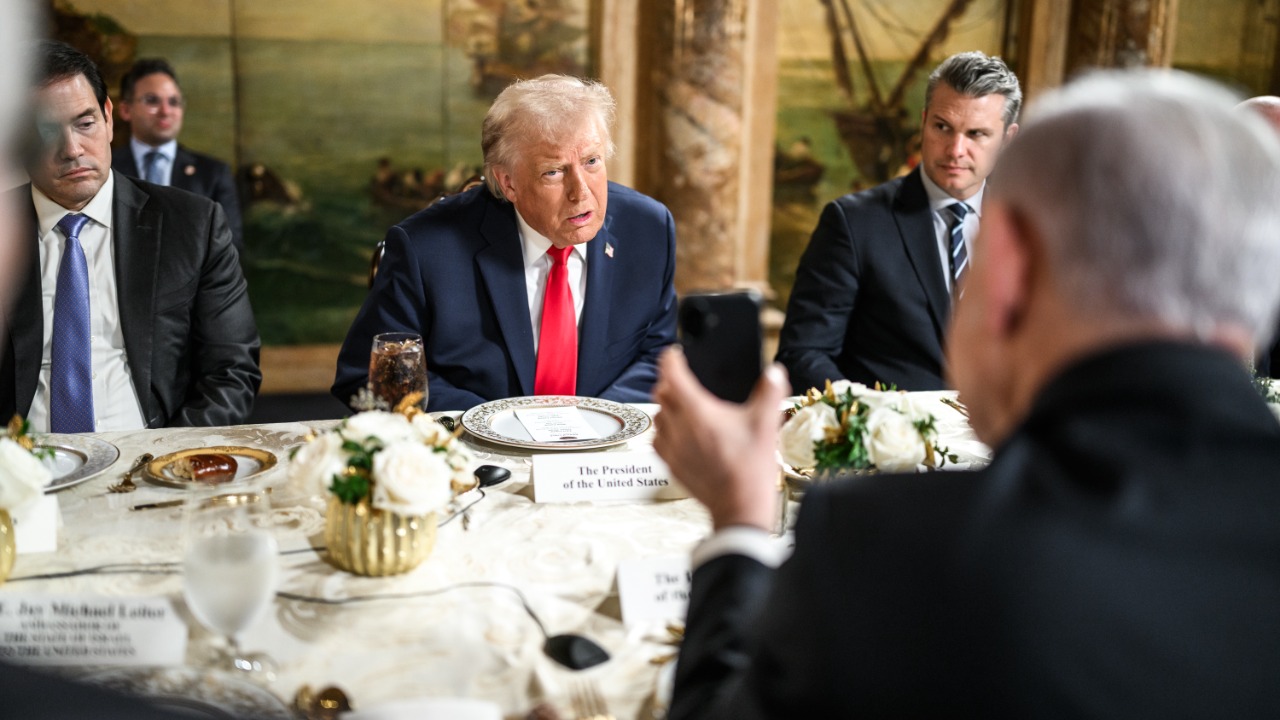
The most consequential line of the day came in Trump’s arrival remarks, when he said phase two could move “as quickly as we can,” but added that “there has to be a disarmament” and “there has to be a disarming of Hamas.” That mattered because it stripped away any illusion that the next phase would simply be a continuation of the first. In Trump’s telling, the ceasefire could not mature into a broader political settlement while Hamas remained armed. That is a much tougher threshold than a temporary pause in fighting. It takes the second phase out of the realm of sequencing and puts it squarely in the realm of strategic surrender, enforcement, or both. For Israel, that language was reassuring because it aligned with the long-running demand that Hamas not be allowed to emerge from the war still able to govern by force. For Palestinians in Gaza, it underscored a harsher reality: the timetable for reconstruction and political transition may depend less on diplomatic ceremony than on whether armed power in the enclave is actually dismantled.
What happened inside the Mar-a-Lago meeting
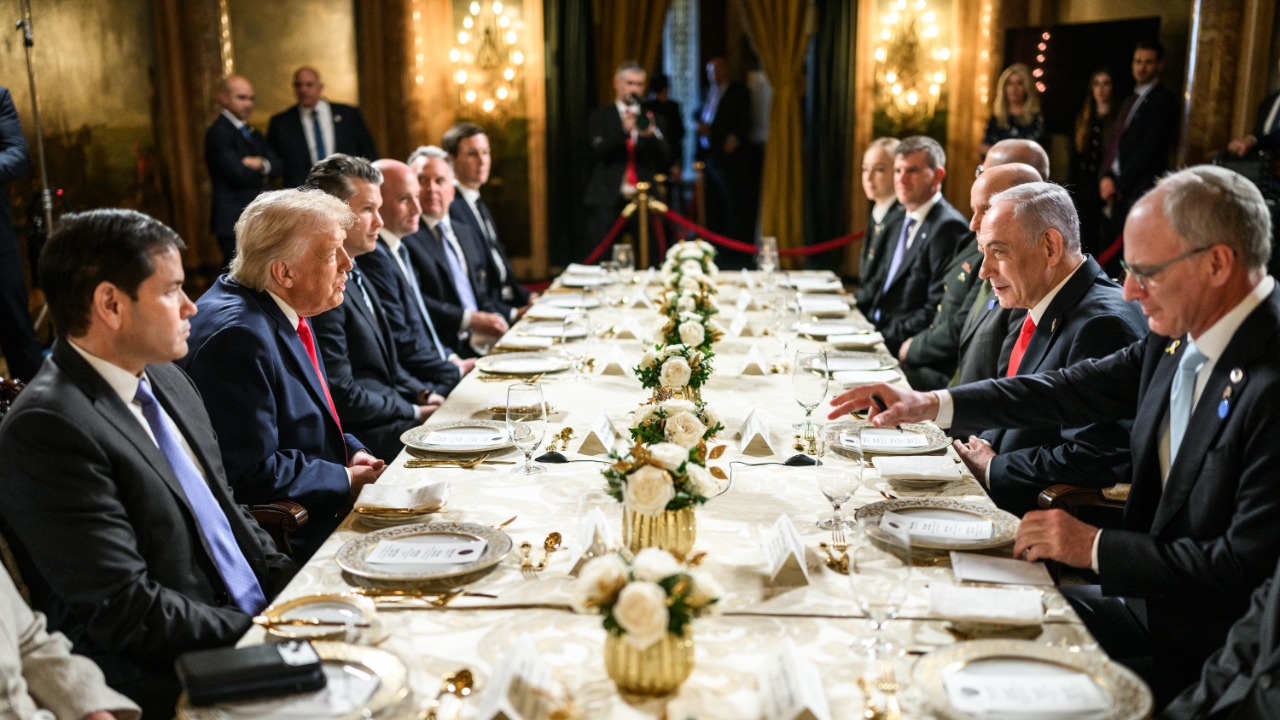
The Mar-a-Lago session unfolded in a familiar but carefully managed way. Trump greeted Netanyahu publicly, the two moved into a bilateral meeting, and the day ended with a joint press appearance. The White House photo gallery documented each stage, from the greeting to the closed-door talks to the press conference, reinforcing that the event was meant to project coordination as much as diplomacy. That sequencing mattered. By laying down the disarmament line before the private talks, Trump framed the rest of the day around a clear public benchmark. The closed meeting then gave both sides room to align their message before returning to the cameras. Even without a detailed public readout of every private exchange, the choreography suggested a shared interest in presenting the Gaza file not as drifting process but as a negotiation with defined entry conditions.
Why the second phase is much harder than the first
The challenge is that phase two is not one decision. It is a bundle of decisions that all depend on one another. As The Associated Press reported when U.S. envoy Steve Witkoff said the plan was moving into its next phase, the package includes disarming Hamas, rebuilding Gaza and establishing a technocratic Palestinian administration to handle day-to-day governance. AP later noted that the second phase also raises difficult questions about international forces, governance details and the sheer scale of reconstruction, which the U.N. has estimated at more than $50 billion. Each of those pieces can stall the others. A new administration for Gaza is hard to install if armed groups still dominate the ground. Reconstruction money is hard to mobilize if donors do not trust the security environment. An international presence is hard to deploy without political agreement on its mandate. That is why Trump’s answer at Mar-a-Lago, blunt as it was, captured the basic problem. There is no easy glide path from a truce to a postwar order if the military question remains unresolved.
The U.N. framework gives the plan legitimacy, but not clarity
The bilateral meeting also rested on a wider diplomatic structure already in place. In November, the Security Council adopted Resolution 2803, endorsing the broad U.S.-backed Gaza framework, welcoming a Board of Peace and authorizing a temporary International Stabilization Force. U.N. coverage of the vote described it as giving formal backing to the overall architecture while leaving a great deal of implementation unresolved. That matters because international endorsement is not the same thing as an operational blueprint. The resolution provides diplomatic scaffolding, but the hard bargaining still sits with Washington, Jerusalem and the regional actors expected to help carry the plan. The limits of that multilateral consensus were visible in September, when the United States vetoed a Security Council resolution calling for an immediate ceasefire and the lifting of restrictions on aid deliveries, a reminder that Washington will support U.N. action on Gaza selectively and on terms it sees as consistent with its own approach.
Iran remains the complication hanging over the ceasefire
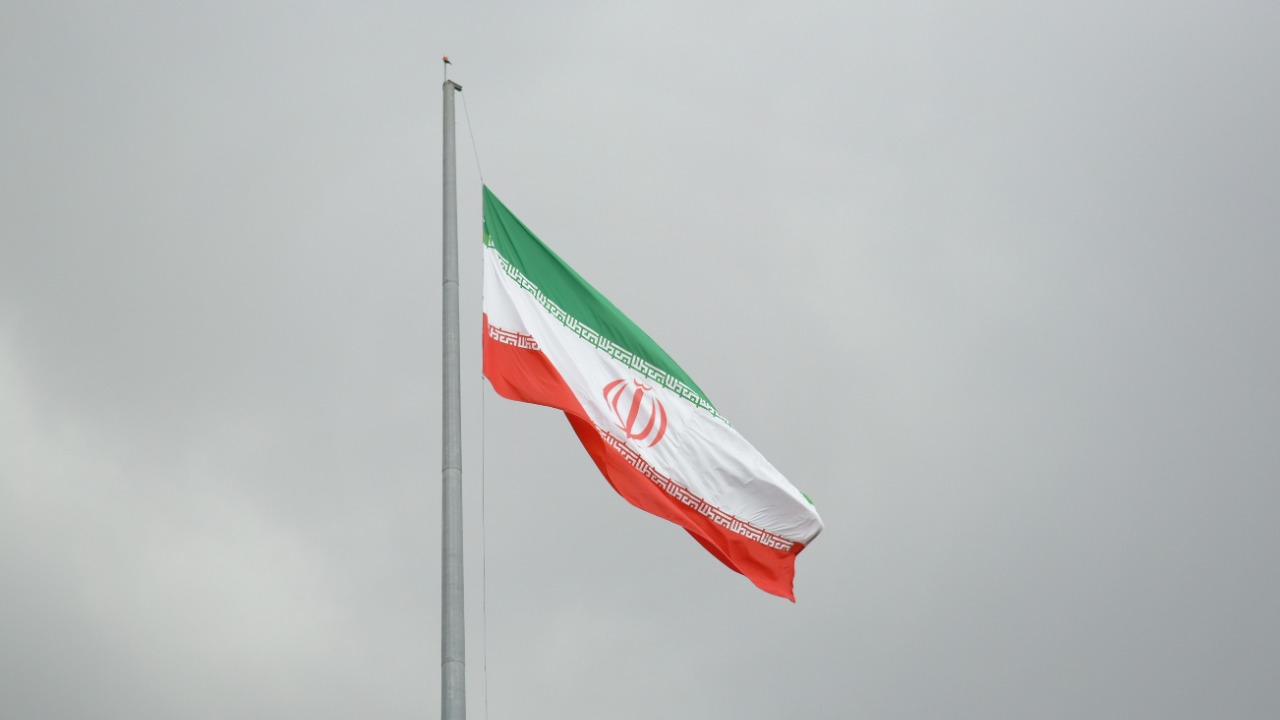
Even at a meeting focused on Gaza, the wider regional picture was impossible to ignore. That is especially true because the Trump-Netanyahu relationship has not been defined by Gaza alone. Reuters reported in February that after later talks the two leaders had reached no “definitive” agreement on how to proceed with Iran, even as Trump insisted diplomacy with Tehran would continue. By early March, Reuters described the widening Iran crisis as a test of the war alliance between the two men. That backdrop gives the Mar-a-Lago meeting added importance. On Gaza, Trump and Netanyahu were able to stand together around the idea that Hamas cannot remain armed if phase two is to mean anything. But the broader regional environment still threatens to complicate that alignment. If Gaza requires steady diplomacy while Iran pulls both governments toward a larger confrontation, the second phase will face pressure from two directions at once. That is what made the Mar-a-Lago encounter more than a photo opportunity. It was an attempt to turn a fragile ceasefire into the outline of a postwar plan, while admitting, at least implicitly, that the hardest arguments had only just begun. Trump’s message was simple enough to fit into one soundbite. The reality behind it is far more difficult: no second phase will be credible unless the disarmament demand, the governance question and the rebuilding effort move together. Right now, that remains the challenge at the center of the ceasefire.