
Costa Rica moved sharply to the right on Sunday as Laura Fernández won the presidency in the first round, a result that gave outgoing President Rodrigo Chaves’ political movement another four years and signaled that public concern over crime had become the dominant force in the campaign. With most polling places counted late Sunday, Fernández built a lead large enough to clear the 40% threshold needed to avoid a runoff, according to preliminary figures from Costa Rica’s Supreme Electoral Tribunal. The victory was more decisive than many observers expected in a crowded field, and it immediately turned Fernández from Chaves’ chosen successor into the central figure in one of the most important political realignments the country has seen in years.
A first-round win few expected
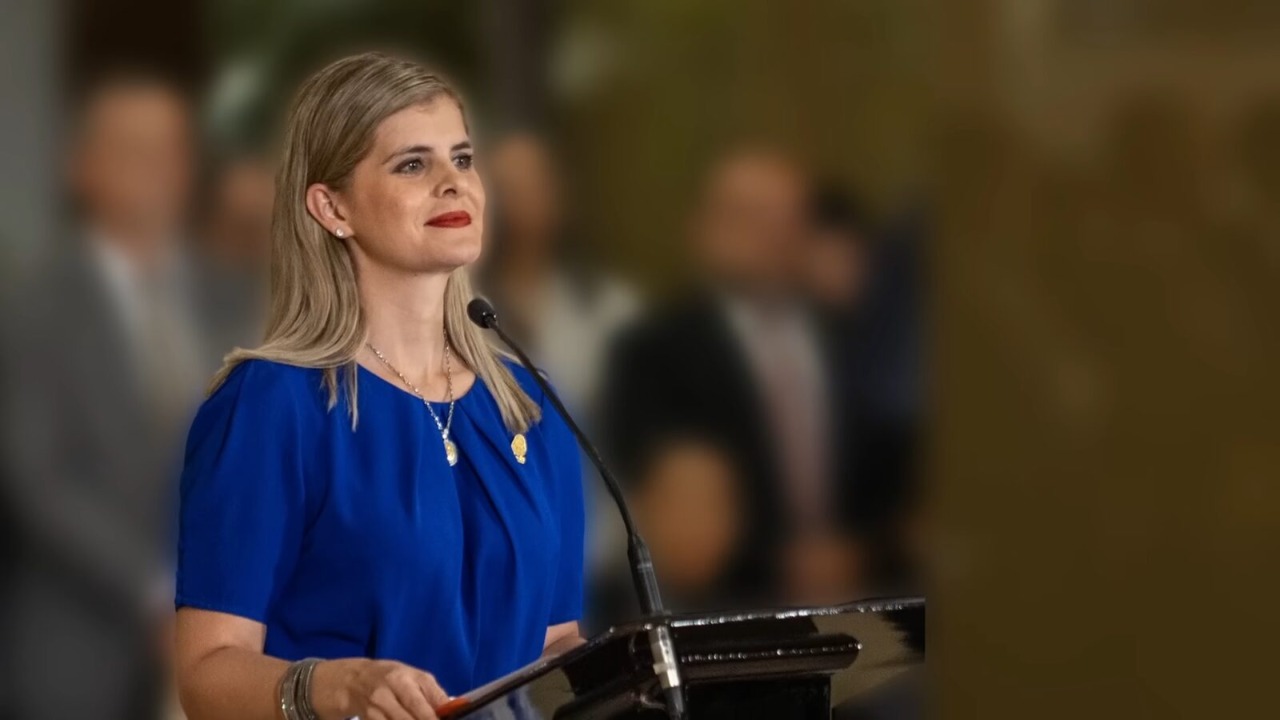
Fernández entered election day as the frontrunner, but the size of the margin still stood out. Reuters reported that she was leading with 48.51% of the vote, while her nearest rival, Álvaro Ramos, was at 33.32% with a large majority of ballots counted. The Associated Press similarly reported that with 96.8% of polling places tallied, Fernández had 48.3% to Ramos’ 33.4%. That mattered because Costa Rica’s electoral system requires a candidate to win at least 40% in the first round to avoid a runoff. In a country with a fragmented party system and a long habit of competitive presidential races, many had assumed a second round would be necessary. Instead, Fernández appeared to end the contest in a single night. The result also carries historic significance, though not in the way the original headline suggested. Fernández is set to become Costa Rica’s second woman president, following Laura Chinchilla, who served from 2010 to 2014. That gives the election a historic marker, but the deeper story is political rather than symbolic. Fernández did not emerge from the old centrist establishment. She rose as the chosen successor to a president who built his brand on confrontation with the political class and promises to force faster change.
Chaves won again, even without being on the ballot
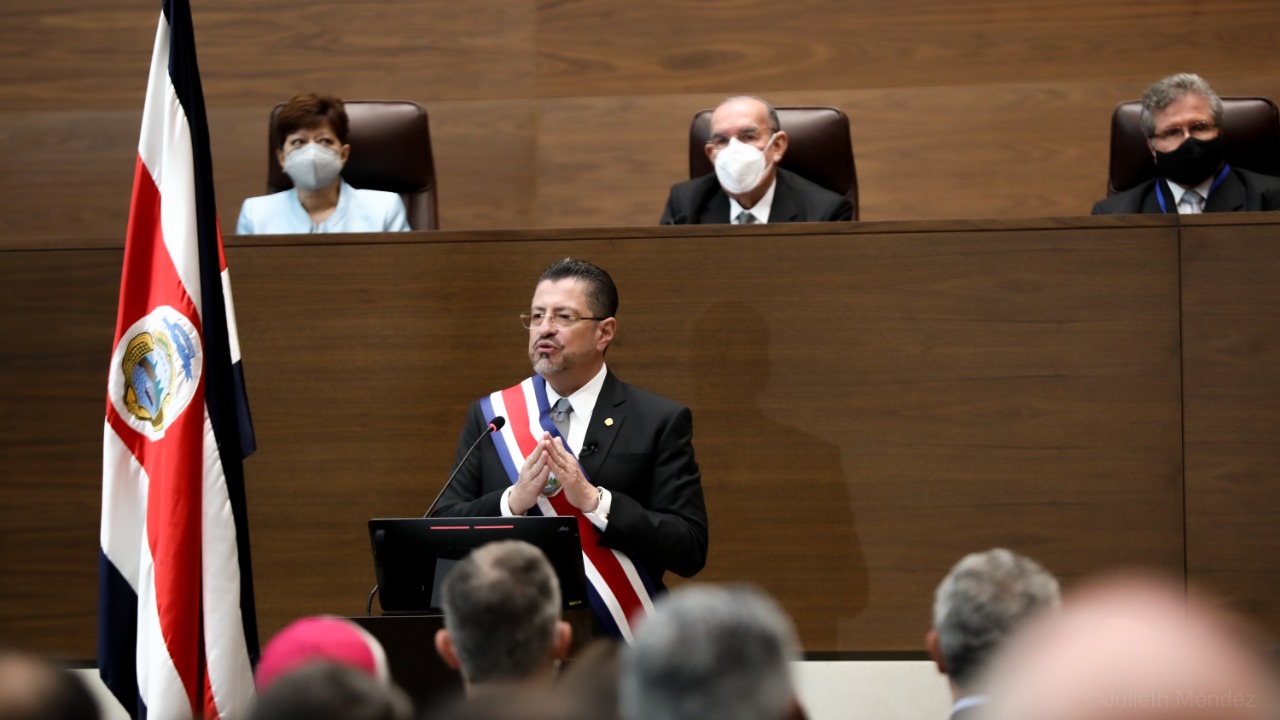
Fernández did not run as a break from the current administration. She ran as its continuation. A former planning minister and later minister of the presidency, she is one of Chaves’ closest allies and campaigned explicitly on extending his political project. That makes the result more than a personal victory. It is a validation of the political style Chaves brought to office, including his anti-establishment message, his confrontations with traditional elites, and his claim that Costa Rica’s institutions have become too slow or too compromised to deal with the country’s problems. It also creates the first major test of Fernández’s presidency before she even takes office. Her appeal was tied closely to Chaves, but governing will require more than loyalty. She will need to convince voters that she can preserve the energy of the movement while operating as a president in her own right, especially if conflicts with the legislature, the courts, or the press intensify.
Why crime overtook every other issue
The clearest driver of the election was security. Costa Rica has long marketed itself as one of Central America’s most stable democracies, but that image has been strained by a surge in drug-linked violence. Rising violence became the defining issue of the race as voters looked for a tougher response and less patience with institutional caution. Fernández met that demand with a hard-line message. She pledged to continue Chaves’ security policies and signaled admiration for El Salvador’s aggressive anti-crime approach. That helped her present herself as the candidate most willing to act forcefully rather than cautiously, a contrast that appeared to resonate with voters worried about crime, trafficking, and the erosion of everyday safety. For many voters, that was the campaign’s simplest and most persuasive argument. Fernández did not need to win a broad ideological debate about the future of the state. She needed to persuade voters that order had become urgent and that continuity, not experimentation, offered the fastest response.
A conservative shift with local roots
Her victory will inevitably be folded into the wider story of Latin America’s ideological swings, but Costa Rica’s election was shaped less by abstract ideology than by local pressures that had become impossible to ignore. The country’s traditional image, peaceful, institutionally stable, and more moderate than many of its neighbors, collided with a public mood defined by frustration over crime and distrust of established political actors. Fernández benefited from both. She was able to present herself as an insider with executive experience and as the vehicle for a governing movement that still claims outsider energy. That combination helps explain why the race broke open in the first round. In another era, Costa Rica’s political center may have absorbed voter frustration. This time, the demand for a more confrontational answer proved stronger.
The real questions start now

Fernández will take office with something many new leaders lack: a clear electoral mandate. But the same factors that delivered her victory also raise the stakes for her administration. Voters who backed her because they want visible progress on public safety will expect results quickly. A security-first campaign can win decisively. Governing on that promise is harder. There is also the institutional question. Costa Rica’s democratic reputation still carries weight, but critics of the current governing movement have warned that its rhetoric can blur the line between impatience with the system and contempt for checks and balances. Fernández will have to show that a tougher governing style does not come at the expense of the country’s democratic norms. That is why this result matters beyond the horse race. Costa Rica did not just choose a new president. It gave the country’s conservative populist turn a stronger mandate than many expected. Fernández now has the chance to prove that a tough-on-crime victory can become a durable governing project rather than just an election-night release valve for public anger. Whether she can do that without deepening institutional strain will determine how this win is remembered: as the start of a new political era, or as a powerful reaction to fear that proved much harder to govern than to campaign on.