
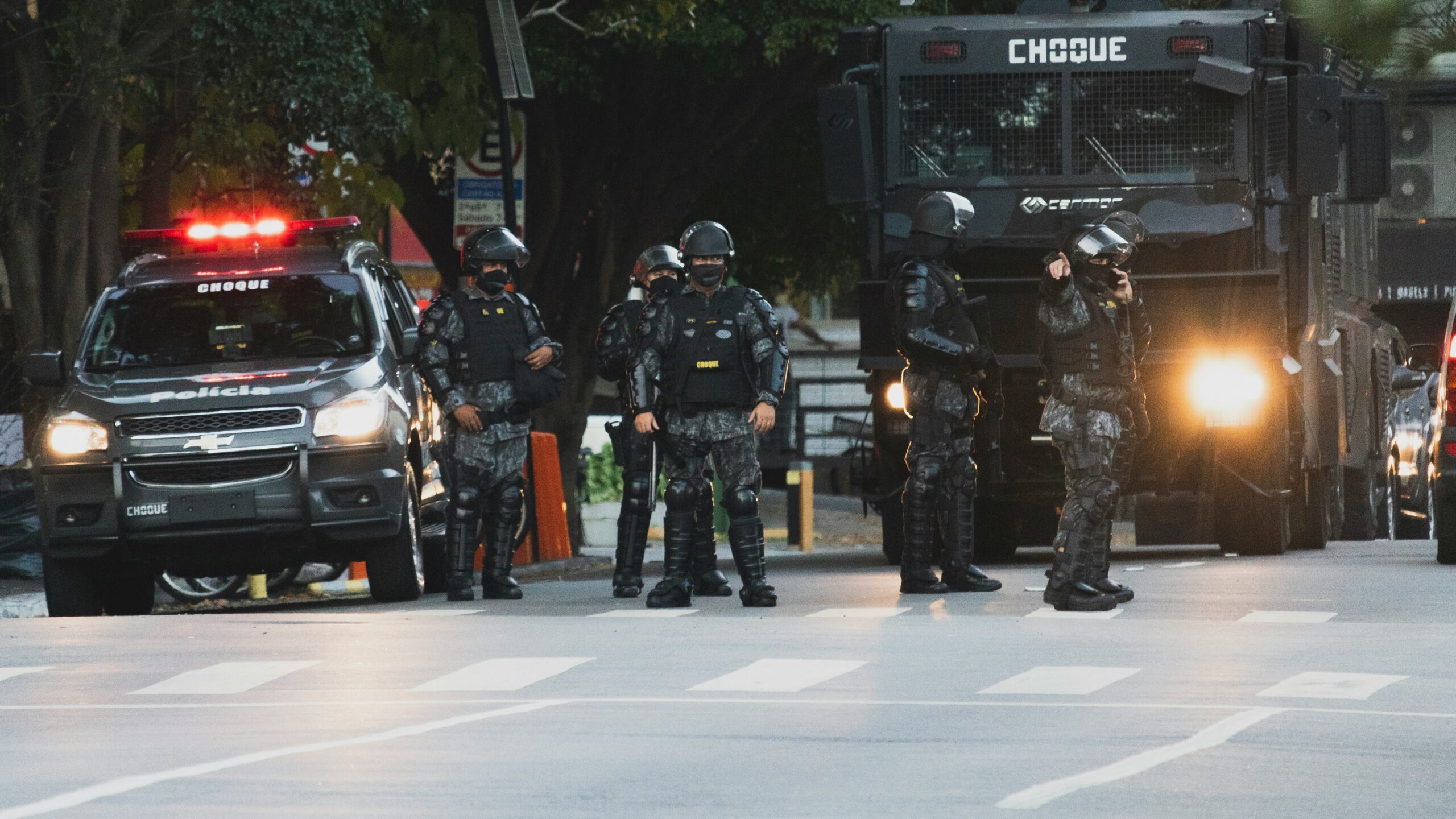
Mexican authorities have arrested six alleged members of Venezuela’s Tren de Aragua gang in Mexico City, a move officials framed as part of a broader campaign against transnational criminal networks that profit from drug trafficking, extortion, and human trafficking.
The arrests landed in the middle of an intensifying international push to disrupt the gang’s expanding footprint, with parallel law enforcement pressure building in Europe and the United States. Taken together, the cases show how Tren de Aragua’s fast geographic spread has triggered a coordinated, multi-continent response that is still evolving.

Six Arrests in Mexico City, With Attention on U.S.-Linked Flows
Mexico’s Security Secretary, Omar García Harfuch, announced the Tren de Aragua arrests after surveillance tied to multiple buildings in the capital. Authorities said they seized drugs, a firearm, and a notebook they described as documenting extortion activity. The detainees included one woman and five men, according to reporting by the Associated Press. AP’s account of the operation placed the case inside a wider Mexico-U.S. enforcement conversation focused on cartel revenue streams and cross-border pressure for results.
While Mexican officials did not publicly map every downstream connection, the type of criminal portfolio attributed to Tren de Aragua in the case matters for U.S. audiences because it overlaps with high-profit routes that frequently extend north. Human trafficking and extortion, in particular, often rely on the same logistics, document fraud, and intimidation methods used to move people through multiple jurisdictions. That is why U.S. officials increasingly describe Tren de Aragua as more than a conventional street gang, and why arrests far from the U.S. border can still be treated as relevant to American investigations and financial tracing.
A Gang Born in Prison, Now Operating Across Continents
Tren de Aragua originated in Venezuela’s prison system and has since evolved into one of the most feared transnational criminal brands associated with the Venezuelan migration crisis. Reporting on the gang routinely ties it to drug trafficking, human smuggling, and violent coercion used to control local markets and migrant communities. Spanish authorities and AP reporting describe the organization’s spread as tracking migration corridors, with cells appearing where new communities settle and where illicit markets can be built quickly.
That model also helps explain why enforcement agencies increasingly focus on the gang’s “service” functions rather than only its violence. A cell that can manufacture, distribute, collect extortion payments, launder proceeds, and enforce debts can be replicated even when leaders are arrested. The result is a decentralized structure that is resilient under pressure, and a primary reason police in multiple countries now treat Tren de Aragua as a strategic cross-border threat rather than a localized public safety problem.

Spain’s First Takedown of an Alleged Tren de Aragua Cell
Europe’s most closely watched Tren de Aragua case to date unfolded in Spain, where police arrested 13 suspects across five cities in what Spanish authorities described as the country’s first operation dismantling a suspected cell linked to the gang. Reuters reported the arrests followed raids in multiple locations, underscoring investigators’ belief that the network was distributed rather than concentrated in one neighborhood.
Spanish police said the operation dismantled two laboratories used to make “tusi,” a synthetic drug mixture that has become a profitable niche product in parts of Europe and Latin America. AP reporting on the Spanish case noted the investigation accelerated after the arrest in Barcelona of a relative of the gang’s leader under an international warrant, suggesting Spanish investigators were tracking both local activity and cross-border ties.
Spain is also a major destination for Venezuelan migrants, and the Spanish case illustrates a recurring pattern: where large new diaspora communities form, organized crime groups can attempt to embed themselves through intimidation, recruitment, and exploitation. For local police, that creates a rapid learning curve because the group’s reputation and tactics were not a routine part of European organized crime training even a few years ago.
The U.S. Strategy: Treating Tren de Aragua as an Enterprise
In the United States, federal officials have increasingly emphasized enterprise-style prosecutions and multi-agency coordination against alleged Tren de Aragua networks. A Justice Department roundup published in late 2025 highlighted investigations and charges across multiple jurisdictions, describing Tren de Aragua as a rapidly expanding organization and emphasizing firearms, narcotics, and violence-linked enforcement priorities. The DOJ’s nationwide summary offered a snapshot of how federal agencies are approaching the problem: mapping networks, using conspiracy tools, and pursuing leadership and facilitators.
Another DOJ release out of the Southern District of Texas described terrorism and international drug distribution charges targeting alleged senior leadership, while also documenting international cooperation that led to an arrest in Colombia tied to a U.S. request. The SDTX case reflects an approach built around extradition pressure, financial disruption, and pursuit of higher-level operators, not only street-level arrests.
As enforcement expands, investigators face a recurring risk: aggressive tactics can scare off witnesses in migrant neighborhoods, even when migrants are victims rather than collaborators.
Cross-Border Enforcement and the Challenge of Protecting Migrants
The international cases in Mexico, Spain, and the United States point to the same operational dilemma: how to confront a transnational gang that preys on migrant vulnerability without deepening that vulnerability through indiscriminate enforcement. Tren de Aragua has repeatedly been linked to coercion against migrants, including extortion and trafficking dynamics that rely on fear, debt, and isolation. That means migrant shelters and informal settlements can become both targets for recruitment and communities at risk of being over-policed.
In practical terms, the most effective pressure tends to combine targeted arrests with financial and logistical disruption. Spain’s case shows the value of long-running surveillance and network mapping. Reuters’ account of the raids described a coordinated operation across several cities, the kind of approach designed to limit flight and evidence destruction. Mexico’s case, as described by AP, reflects a push to act on surveillance quickly and seize records linked to extortion, which can become a backbone for broader conspiracy cases. In the U.S., the Justice Department’s late-2025 summaries show an emphasis on multi-district coordination and enterprise theories that can reach facilitators and money movement. DOJ
What remains unresolved is the balance between public safety urgency and community trust. Migrants who fear detention or retaliation often avoid police, even when they have critical information. That can leave investigators blind to the very exploitation they are trying to stop. Pairing enforcement with safeguards, including access to legal counsel, credible victim reporting pathways, and community outreach that distinguishes victims from suspects, can determine whether crackdowns actually weaken recruitment or inadvertently make communities easier to prey on.