
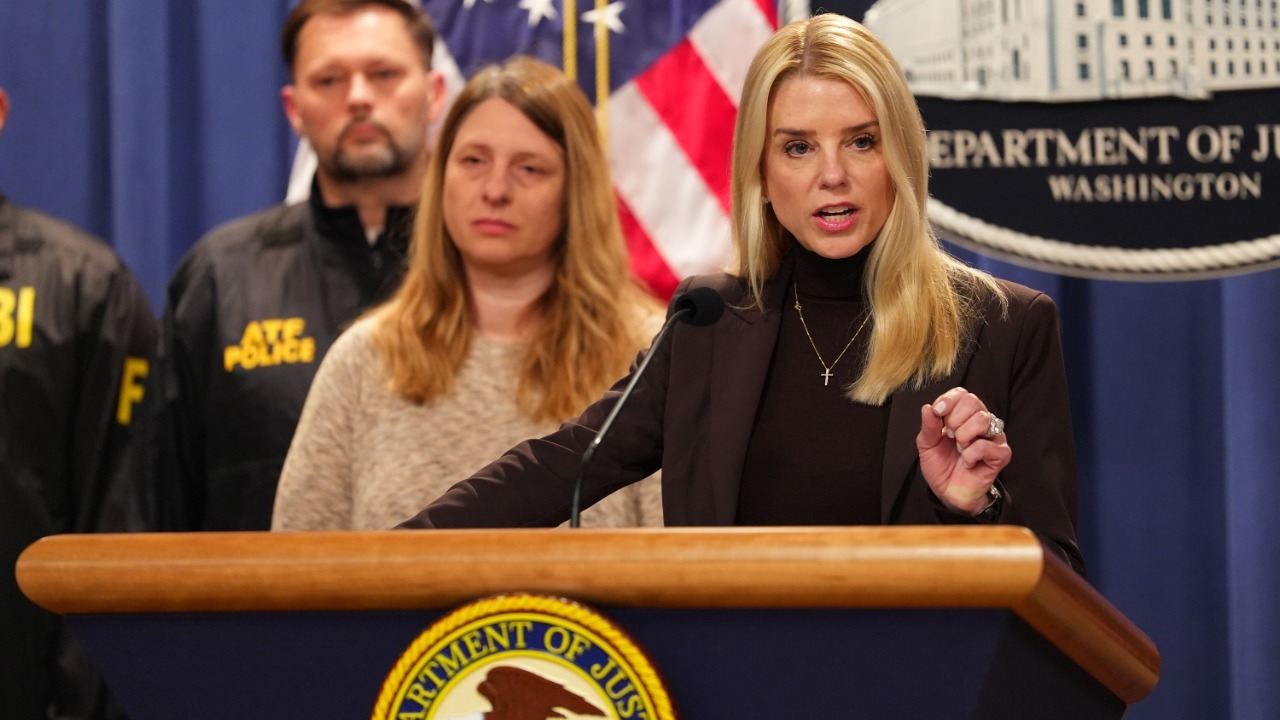
Attorney General Pam Bondi is under fire from both parties over the Justice Department’s handling of the Jeffrey Epstein files. Republican and Democratic lawmakers accuse her of stonewalling Congress, shielding powerful names, and even spying on the legislators tasked with oversight.
The February 11, 2026 hearing before the House Judiciary Committee was supposed to be about answers. Instead, Bondi traded insults with members of her own party and the opposition alike. She called Republican Rep. Thomas Massie of Kentucky a “failed politician” with “Trump Derangement Syndrome.” She told a Democratic member, “You’re a washed-up loser lawyer.” The name-calling dominated headlines, but the substance of what lawmakers uncovered was far more damaging.
Millions of Pages Released, Millions More Missing
The DOJ has published roughly 3.5 million pages so far, covering the Southern District of Florida and Southern District of New York cases, the Ghislaine Maxwell case, Epstein’s death investigations, the butler case, FBI probes, and the DOJ Inspector General’s investigation. The materials are hosted on a dedicated online portal in a searchable format.
A DOJ document attributed to Bondi described an initial handoff of roughly 200 pages and said she later discovered thousands of additional pages that had never been disclosed. She then directed FBI leadership to deliver the remaining records. If the attorney general herself didn’t know the full scope of what the department was sitting on, the public has little reason to trust that even 3.5 million pages represent a complete picture. Bondi had already announced a staged rollout with her first-phase release of declassified materials, fueling suspicion that the pacing is political rather than procedural.
Victims Exposed, Coconspirators Protected
During the hearing, Massie revealed that the DOJ left the names of Epstein’s victims unredacted while fully blacking out the names of alleged coconspirators in a child sex trafficking investigation. Rep. Ro Khanna later read the redacted names on the House floor, including Epstein financier Les Wexner, who had been shielded until lawmakers publicly shamed the DOJ into revealing his identity.
Rep. Pramila Jayapal, a Washington Democrat, pressed Bondi on why certain names that were supposed to be redacted for victim privacy appeared inconsistently across different batches, while powerful figures received airtight protection. Jayapal warned that the asymmetry looked deliberate and would destroy any remaining public trust in the process.
Congress Says the Law Required More
The Epstein Files Transparency Act, introduced as H.R. 4405, requires the attorney general to identify, review, and publicly release Epstein-related records, with only narrow redactions allowed for national security, privacy, and active investigations. Democrats on the House Oversight and Judiciary committees say the DOJ’s phased approach, heavy redactions, and rolling “discoveries” of new material gut the mandate. Massie, who co-authored the bill, agrees.
Ranking Member Robert Garcia, a California Democrat, has formally demanded Bondi comply with the committee’s subpoena for complete file production. Rep. Summer Lee, a Pennsylvania Democrat, went further and moved to hold Bondi in contempt of Congress for failing to satisfy it. In January, Oversight Democrats forced a vote on contempt, but Republicans blocked it.
The “Burn Book” That Blew Up the Hearing
The confrontation took a darker turn when a Reuters photograph showed Bondi at the hearing holding a printed document labeled “Jayapal Pramila Search History.” The document listed at least eight specific files that Jayapal had searched during her review of the unredacted Epstein files at a secure DOJ facility. Jayapal accused the department of surveilling members of Congress and called the printout a “burn book.”
Two days later, on February 13, Judiciary and Oversight Committee Democrats sent Bondi a letter demanding the DOJ stop tracking which lawmakers searched for which terms, how long they spent on specific records, and what they focused on. The DOJ said the logging was meant to protect victim information, but Republican Rep. Nancy Mace of South Carolina said she also believed the department was tracking her searches. Even House Speaker Mike Johnson said he didn’t think tracking lawmakers’ activity was appropriate.
Rep. Jamie Raskin, the ranking Democrat on the Judiciary Committee, announced plans to ask the DOJ Inspector General to investigate whether the department monitored lawmakers’ search activity in violation of the separation of powers.
Where This Goes Next
The fallout has cracked open unusual fault lines. Trump backed Bondi after the hearing and attacked Massie on Truth Social, calling him a “RINO” in “Wacky Liz Cheney territory.” Massie fired back on ABC’s “This Week,” saying Bondi “wasn’t confident enough to engage in anything but name-calling.”
The Epstein file releases are no longer just a question of what the documents contain. They have become a test of whether the Justice Department answers to Congress or treats oversight as something to manage, monitor, and outlast. With subpoenas pending, contempt proceedings stalled along party lines, and calls for an independent review growing louder from both sides, the next round of disclosures will unfold under more scrutiny than anything Bondi has faced so far.