Overview Today
  • U.S.
  • Politics
  • World
    • Russia
    • China
    • Middle East
    • Europe
    • Israel
    • South America
  • Crime
  • Local
    • Dallas-Fort Worth
No Result
View All Result
SUBSCRIBE
Overview Today
  • U.S.
  • Politics
  • World
    • Russia
    • China
    • Middle East
    • Europe
    • Israel
    • South America
  • Crime
  • Local
    • Dallas-Fort Worth
No Result
View All Result
Overview Today
No Result
View All Result
Home Politics

Democrats and voting rights groups sue over Trump order targeting mail ballots

Megan O'neill by Megan O'neill
April 8, 2026
in Politics
Reading Time: 9 mins read
0
Greg Thames/Pexels

Greg Thames/Pexels

74
SHARES
1.2k
VIEWS
Share on FacebookShare on Twitter

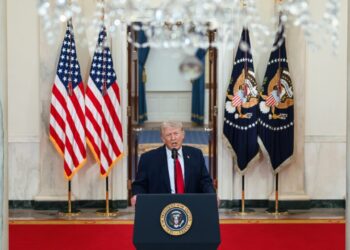
Within two days of Donald Trump signing an executive order aimed at tightening mail voting, Democrats and voting rights groups took him to court, setting up a fast-moving legal fight over who gets to write the rules for federal elections.

You might also like

Trump says Pam Bondi is out, elevates Todd Blanche to acting attorney general

AG Bondi Faces Bipartisan Criticism Over Incomplete Epstein File Release

Rep. Greene Warns Republicans Must Fix ‘Woman Voting Problem’ Before Midterms

The challenge goes well beyond campaign-year rhetoric. At stake is whether the White House can pull federal agencies into the machinery of absentee voting in time for the midterm cycle, or whether that authority still rests where it traditionally has: with the states and Congress. That is the constitutional line the new lawsuits ask judges to defend.

What the order does

Edmond Dantès/Pexels

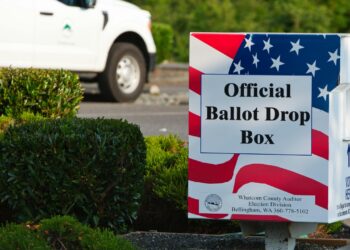
The dispute centers on Executive Order 14399, which the White House says is meant to strengthen election integrity by verifying citizenship and imposing uniform standards for ballots sent through the mail. In a related fact sheet, the administration argues the federal government must do more to ensure only eligible voters receive and cast mail ballots.

But the order goes further than a broad statement of principle. The text directs the Department of Homeland Security, working with the Social Security Administration, to build state-specific citizenship lists that can be transmitted to election officials. It also instructs the U.S. Postal Service to begin a rulemaking process requiring official election mail markings, ballot envelopes with tracking barcodes, and new procedures tied to state-submitted lists of voters designated to receive mail or absentee ballots.

Most significantly, the order says the Postal Service should propose rules under which it would not transmit a mail-in or absentee ballot unless the individual is enrolled on a state-specific participation list. In practical terms, that would insert a federal process between voters and the ballots states are trying to send or receive through the mail. The order also contemplates enforcement steps, including the possible withholding of federal funds where the administration says existing law allows it.

In its initial report on the signing, the Associated Press described the measure as an attempt to create a nationwide list of verified eligible voters while restricting the Postal Service from sending absentee ballots to people not on approved lists. Election law experts cited by the AP said the move could conflict with the Constitution’s allocation of election authority.

Who sued and why

Image Credit: United States Senate - CC BY 2.0/Wiki Commons
Image Credit: United States Senate – CC BY 2.0/Wiki Commons

The first major lawsuit from Democratic leaders was filed by Senate Minority Leader Chuck Schumer, House Minority Leader Hakeem Jeffries, the Democratic National Committee and allied party organizations working on Senate, House and gubernatorial races. According to Associated Press reporting, the plaintiffs argue that Trump is attempting to claim authority the Constitution assigns to the states and Congress, not the presidency.

A separate case was filed by voting rights organizations. The American Civil Liberties Union and its partners brought a federal lawsuit on behalf of groups including the League of Women Voters of Massachusetts, the Association of Americans Resident Overseas, the U.S. Vote Foundation, OCA – Asian Pacific American Advocates and Delta Sigma Theta Sorority, Inc. Their complaint outlines a broader set of legal objections than the political case alone.

The core argument is straightforward, even if the briefing will become technical. The Constitution gives states primary authority to run elections, while Congress can set federal law. The president, the plaintiffs say, cannot establish new nationwide rules for absentee voting by executive order. They also argue that Trump cannot direct the U.S. Postal Service, which Congress established as an independent entity, to act as a gatekeeper for who can vote by mail.

The voting rights complaint goes further, arguing that the order imposes an undue burden on voting, violates the Voting Rights Act by threatening to deny qualified citizens the right to vote, and conflicts with the Privacy Act by requiring the Department of Homeland Security to rapidly assemble and distribute citizenship and residence data that may be incomplete or inaccurate. The suit says those errors would not fall evenly. They would be most likely to affect people who already rely heavily on mail voting, including military families, Americans living abroad, older voters, recently naturalized citizens and voters with disabilities.

Why this fight matters

Image Credit: G. Edward Johnson - CC BY 4.0/Wiki Commons
Image Credit: G. Edward Johnson – CC BY 4.0/Wiki Commons

What makes the lawsuits more than symbolic is timing. Ballot rules are not something election officials can easily rewrite late in the cycle. States would need time to understand any federal rulemaking, decide whether to cooperate with the Postal Service process, adjust ballot-envelope standards and resolve conflicts if federal citizenship data does not match state voter rolls.

That last point may be the most significant challenge for the administration. The order relies on federal data sources, including records from the Department of Homeland Security and the Social Security Administration, but critics say those systems were not designed to function as a national voter eligibility gatekeeper. The Associated Press has reported that the DHS SAVE system has drawn scrutiny over inaccurate results and privacy concerns, while plaintiffs in the voting rights case argue that a rushed federal list could exclude eligible voters or misclassify them.

There is also the matter of precedent. This is not the first time Donald Trump has sought to use executive power to reshape election administration. The new complaints point to his 2025 election order, which multiple federal judges blocked in significant part after finding that the president had likely exceeded his authority. That earlier litigation does not determine the outcome of the current case, but it provides challengers with a clearer constitutional roadmap and gives courts recent case law addressing the same separation-of-powers questions.

What comes next

Image Credit: G. Edward Johnson - CC BY 4.0/Wiki Commons
Image Credit: G. Edward Johnson – CC BY 4.0/Wiki Commons

For now, the most important fact is that the text of the order is public and the lawsuits are no longer hypothetical. The legal record already shows a direct collision between the administration’s claim that it is protecting election integrity and the challengers’ claim that it is attempting to federalize mail voting without congressional approval.

What is not yet clear is how quickly judges will act, whether any part of the order can survive intact, or how much of it the Postal Service could realistically implement on the timetable Donald Trump set. A U.S. Postal Service spokesperson told the Associated Press that the agency would review the order, but no detailed implementation plan has been made public.

The uncertainty is why the lawsuits matter now rather than closer to Election Day. The plaintiffs are seeking to halt what they describe as a disruptive federal effort before election administrators, campaigns and voters begin making decisions based on rules that may never take legal effect. However the case is resolved, it is poised to test how far a president can go in attempting to reshape the mechanics of American voting without a new act of Congress. On that question, the courts are now on the clock.

Share30Tweet19
Megan O'neill

Megan O'neill

Megan O’Neill is a Florida-based writer covering politics, public policy, and economic development, with a focus on state and local issues.

Recommended For You

Trump says Pam Bondi is out, elevates Todd Blanche to acting attorney general

by Megan O'neill
April 3, 2026
0
Image Credit: The White House - Public domain/Wiki Commons

Donald Trump said Pam Bondi is leaving as attorney general and that Deputy Attorney General Todd Blanche will serve as acting attorney general, a move that reshapes leadership...

Read moreDetails

AG Bondi Faces Bipartisan Criticism Over Incomplete Epstein File Release

by Megan O'neill
March 28, 2026
0
Pam Bondi in 2025

Attorney General Pam Bondi is under fire from both parties over the Justice Department's handling of the Jeffrey Epstein files. Republican and Democratic lawmakers accuse her of stonewalling...

Read moreDetails

Rep. Greene Warns Republicans Must Fix ‘Woman Voting Problem’ Before Midterms

by Megan O'neill
March 29, 2026
0
Marjorie Taylor Greene (51769864497)

Rep. Marjorie Taylor Greene told Republicans on Sunday that they are “blowing it” with women voters and that the party’s ongoing fight over the Jeffrey Epstein files is...

Read moreDetails

DHS Shutdown Enters Third Day as Senate Democrats and White House Fail to Reach Deal

by Megan O'neill
March 27, 2026
0
United States Department of Homeland Security on 2024

The Department of Homeland Security has now been without funding for three days, and nobody in Washington appears to be in a rush to fix it. The partial...

Read moreDetails

Hillary Clinton Tells House Committee She Has “No Information” on Epstein Crimes in Sworn Deposition

by Megan O'neill
March 25, 2026
0
Image Credit: Gage Skidmore from Peoria, AZ, United States of America - CC BY-SA 2.0/Wiki Commons

Former Secretary of State Hillary Clinton told House investigators under oath that she has no information about Jeffrey Epstein’s crimes and does not recall ever meeting him. The...

Read moreDetails
Next Post
Image Credit: IcedCowboyCoffee – CC0/Wiki Commons

Dallas Police Charge 40-Year-Old in Holly Glen Circle Homicide After 21-Year-Old Found Shot

Browse by Category

  • China
  • Crime
  • Dallas-Fort Worth
  • Europe
  • Israel
  • Local
  • Middle East
  • Politics
  • Russia
  • South America
  • U.S.
  • World

Overview Today

Stay informed with today’s most important headlines from around the world. We bring you clear, up-to-date reports on politics, global events, crime and more — all in one place. Scan the top stories of the day and dive deeper into topics you care about.

Quick Links

  • About
  • Contact
  • Privacy Policy
  • Editorial Policy
  • Terms of Use
  • Disclaimer

Categories

  • U.S
  • Politics
  • World
  • Crime
  • Local

Signup For NewsLetter

    © 2026 Overview Today – Property of First Principles Media, LLC

    No Result
    View All Result
    • U.S.
    • Politics
    • World
      • Russia
      • China
      • Middle East
      • Europe
      • Israel
      • South America
    • Crime
    • Local
      • Dallas-Fort Worth

    Stay informed with today’s most important headlines from around the world. We bring you clear, up-to-date reports on politics, global events, culture, crime, lifestyle and more — all in one place.