Florida is running out of rain, and it’s happening fast.
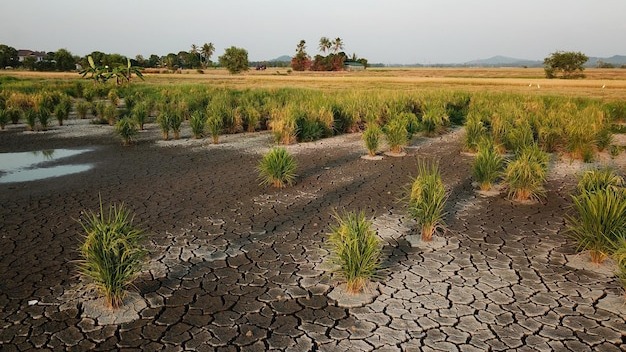
As of mid-February 2026, roughly 99% of the state falls within drought categories D0 through D4 on the federal drought scale, a range that covers everything from abnormally dry conditions to exceptional drought. Those weekly assessments come from the National Drought Mitigation Center at the University of Nebraska-Lincoln, working alongside several federal partners.
Surface water and groundwater reserves are being squeezed at the same time, across nearly every county. February has only made things worse. National Weather Service drought statements for the state described very limited recent rainfall and noted that repeated cold fronts brought cooler air but almost no precipitation (NWS Melbourne; NWS Miami). Front after front has pushed through the state, and each one has left behind dry air instead of storms.
Source: U.S. Drought Monitor / droughtmonitor.unl.edu
Underground, the Real Crisis Is Building
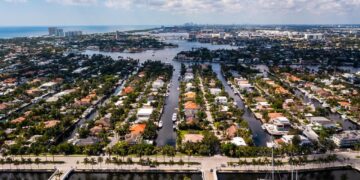
The South Florida Water Management District issued a water shortage warning for multiple counties. They tied the drought directly to falling levels in the Biscayne Aquifer and the Lower Tamiami Aquifer. The Biscayne Aquifer is the primary drinking water source for millions of people in Miami-Dade, Broward and Palm Beach counties. When its levels drop, the pressure that normally keeps ocean water from creeping inland weakens. Those conditions opens the door to saltwater intrusion, where seawater migrates into freshwater wells and forces utilities to start watching chloride levels at coastal well fields much more closely.
The district warned that aquifer levels are expected to keep falling through the dry season, which typically runs until May. For coastal communities, that sets up a slow-building problem: even if rain returns in moderate amounts, it can take weeks or months for aquifer levels to recover enough to push saltwater back. People on municipal water systems may not notice anything at the tap right away, but utilities drawing from shallow wells are already under pressure to manage pumping rates carefully. In some areas, managers may have to shift production away from the most exposed coastal wells or blend water from deeper sources to keep quality standards intact.
Why Florida’s Water System Is Uniquely Exposed
When people think about drought in Florida, they tend to think about dead lawns, crop losses and wildfire season. All of those concerns are valid. But the current drought is exposing a vulnerability that gets far less attention: Florida depends heavily on shallow aquifer systems that respond almost immediately to rainfall swings.
The Biscayne Aquifer sits close to the surface and replenishes almost entirely through direct rainfall. That makes it incredibly productive during wet seasons, but it also means dry seasons hit hard and fast. When 99% of the state is in drought and monthly rainfall totals drop to fractions of an inch, the recharge pipeline shuts down. Water managers are left trying to stretch what they have while watching the calendar and hoping for a strong start to the wet season.
Climate scientists and hydrologists at NOAA and within the Regional Climate Centers network have documented how Florida’s rainfall patterns are driven by large-scale atmospheric circulation, including the positioning of the jet stream and the behavior of tropical systems. When those patterns steer storm tracks away from the peninsula for weeks at a time, the state has few backup options. Florida has no significant snowpack feeding rivers downstream. It has no large upstream reservoirs to draw from. Local rainfall is essentially the only input, and when it stops, the clock starts ticking, especially in fast-growing urban corridors where demand keeps climbing.
A Stress Test in Real Time
Florida’s southeast population centers are growing rapidly on top of a water system that is both highly productive and highly exposed. What’s unfolding right now is essentially a live stress test of how well utilities, water management districts and local governments can coordinate conservation measures before tougher restrictions become necessary.
The wet season could ease some of the immediate pressure, but the underlying math hasn’t changed. As long as critical drinking water supplies depend on aquifers that rise and fall with short-term rainfall, droughts like this one will keep coming back. The question is whether the state plans around that reality or keeps treating each dry spell as a surprise.