

Kansas has moved to void thousands of state records tied to transgender residents after a new law took effect upon publication in the Kansas Register. The measure, House Substitute for Senate Bill 244, requires state-issued documents to reflect sex assigned at birth and applies retroactively to records that had already been changed under prior state procedures.
That retroactive provision sets the law apart. Rather than simply blocking future changes, Kansas is directing state agencies to treat some existing driver’s licenses and birth certificates as invalid if their sex markers do not match the definition now written into law. The result is a sudden legal and administrative disruption for residents whose documents had previously been approved by state authorities.
How the Law Took Effect
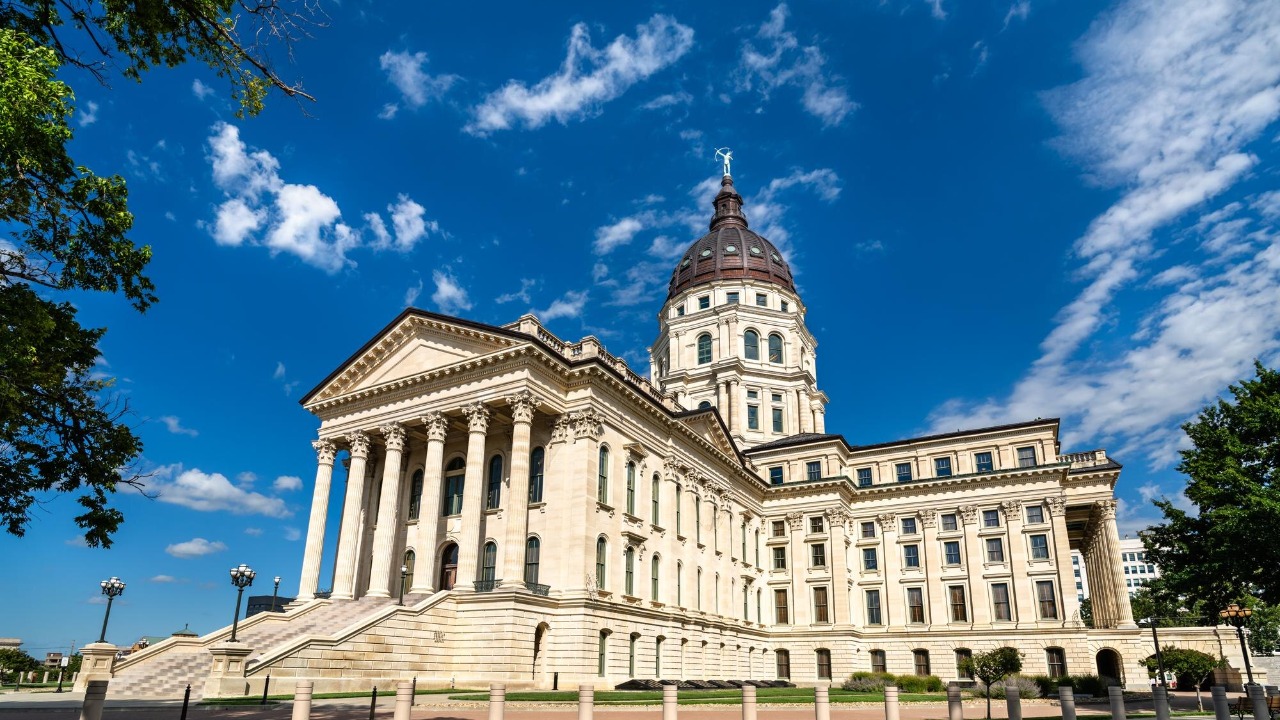
The rollout was unusually abrupt. As published in the Kansas Register, SB 244 took effect upon publication on February 26, 2026, with no transition period. The law directs the Division of Vehicles to invalidate driver’s licenses that list a person’s sex in a way the state now considers inconsistent with its statutory definition. It also declares certain birth certificates invalid on the same basis.
The law further requires the state to update its records. For driver’s licenses, Kansas must notify affected residents that their licenses are invalid and instruct them to surrender those documents before a replacement can be issued. For birth certificates, the state registrar is directed to correct records whose sex designation conflicts with the law’s definition. The immediate effective date turned what might otherwise have been a gradual administrative change into a same-day disruption.
Before this measure, Kansas had already been in a prolonged dispute over sex-marker changes. The state had allowed such changes under agency procedures for years, but that practice became the subject of litigation and political conflict following earlier legislation defining sex in state law. SB 244 did not just reopen that dispute. It sought to resolve the issue by voiding prior changes already recorded in state systems.
How Many Documents are Affected

State estimates cited by The Associated Press put the number of affected documents at about 1,700 driver’s licenses and roughly as many birth certificates.
Kansas is not issuing a symbolic paperwork change. It is reversing documents that had already been altered through state processes. The law’s reach extends beyond future applicants and instead affects residents who had relied on those records in daily life.
For many people, a driver’s license is the primary form of photo identification used to verify identity for work, travel, prescriptions, housing, banking, and routine interactions with law enforcement. A birth certificate carries a different kind of weight, serving as a foundational record used to obtain other forms of identification and benefits. Changing both at once can create immediate mismatches across a person’s records.
Key edits made:
The Veto Override that Made it Law

Gov. Laura Kelly vetoed SB 244, calling it “poorly drafted legislation” and warning it would have consequences extending beyond its stated purpose. But the Republican-controlled Legislature overrode the veto, clearing the way for the law to take effect upon publication.
That override was politically significant, but the publication date is what turned the fight into an immediate reality. Once the law appeared in the Kansas Register, its language on invalid documents was no longer theoretical. The state had the authority to begin treating previously amended driver’s licenses and birth certificates as noncompliant records.
The speed of the rollout is a major reason the measure drew attention. A law that reshapes identification rules can raise serious practical questions even with months of lead time. Kansas provided none. The text included no grace period for affected residents, and the state’s notice language, described in court filings, told recipients their credentials would no longer be valid upon publication of the law.
Why This Goes Further Than Other State Restrictions

Several states already restrict whether transgender residents can change sex markers on official documents. What makes Kansas different is the law’s retroactive design. It does not merely block future updates. It invalidates records that had already been changed.
SB 244 also reaches beyond identification documents. The law requires sex-segregated rules for multiple-occupancy private spaces in public buildings, including restrooms and locker rooms, and establishes enforcement tools that include warnings, civil penalties, a private cause of action, and potential misdemeanor penalties for repeated violations under certain circumstances. In practice, that ties document policy to broader questions about access to government spaces.
That combination helps explain why the legislation has drawn intense scrutiny. It is not simply an administrative records measure or a bathroom policy. It combines both while anchoring them to a statutory definition of sex assigned at birth that now governs other parts of Kansas law.
Lawsuit Filed the Same Day
Legal pushback came almost immediately. Two transgender men filed suit in Douglas County District Court the same day the law took effect. The lawsuit argues the measure violates constitutional protections by immediately invalidating active licenses, forcing people to carry documents that do not match how they live, and restricting restroom access in government buildings.
The same-day filing underscores the stakes. This was not a case in which advocates waited to see how the law might be implemented months later. The challenge was filed immediately because the law was written to take effect at once and because its impact on identification documents was not hypothetical.
What Readers Should Understand About the Impact
SB 244 is significant not because it changes future policy, but because it reverses past decisions. Kansas is treating previously approved record changes as errors that must now be corrected. For affected residents, that means documents they once relied on can suddenly be deemed invalid.
That shift is why the case is drawing national attention. Supporters frame the law as a clear standard based on biological sex. Opponents argue it creates widespread disruption to identification, privacy and access to public spaces. The legal outcome will determine how far states can go in revising their own records after the fact, but Kansas has already positioned itself at the center of that test.