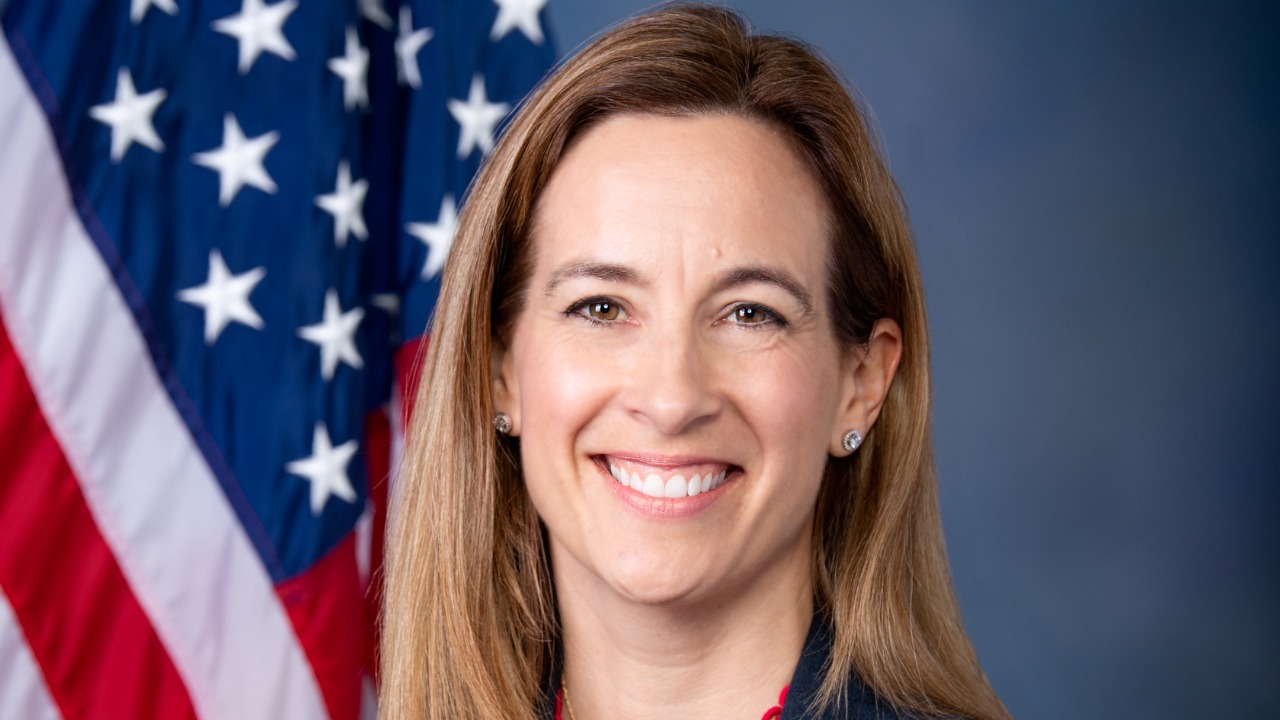
Mikie Sherrill was sworn in Tuesday as New Jersey’s 57th governor, taking office in Newark and making history as the first female military veteran to serve as governor of any U.S. state. The Democrat, a former Navy helicopter pilot and four-term member of Congress, succeeds Phil Murphy and begins her term with affordability at the center of her message. Within hours of taking the oath, Sherrill moved to show that theme was more than inaugural rhetoric. Her administration announced executive actions led by two opening orders aimed at New Jersey’s utility-cost crunch, one of the most immediate kitchen-table issues facing households in a state of roughly 9.5 million people.
Navy pilot to governor’s office
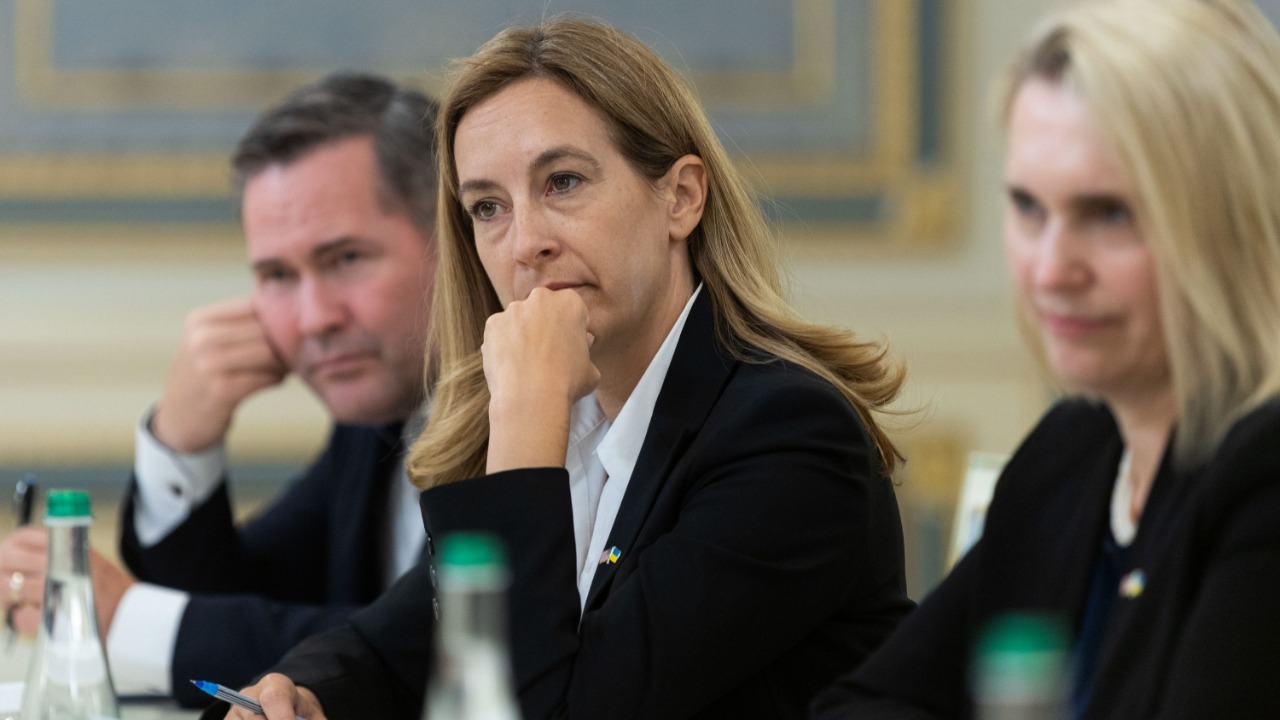
Sherrill’s rise to the governor’s office gives New Jersey a leader with an unusually varied public-service résumé. According to her official biography, she graduated from the U.S. Naval Academy, served as a Navy helicopter pilot, later worked as a federal prosecutor, and then represented New Jersey’s 11th Congressional District in Washington. Her background helped define both her campaign and her first day in office. The Associated Press noted the national significance of the moment: Sherrill became only the second woman to serve as New Jersey governor and the first female military veteran ever elected governor in the United States. The coverage also described a speech that blended biography, public duty, and a warning that residents were being squeezed by costs well beyond their control.
Inauguration day in Newark

The ceremony took place at the New Jersey Performing Arts Center, a choice that gave the day a broader civic feel than a traditional Trenton swearing-in. In her prepared inaugural remarks, Mikie Sherrill introduced herself as ready to serve “all our people,” presenting the governorship as a mission rooted in service rather than ideology. Official state pages now list Dr. Dale G. Caldwell as lieutenant governor and secretary of state, completing the formal transfer of power.
The pairing gives Sherrill a top deputy with experience in higher education, public leadership and state administration, even as the new governor begins building out a broader team to run one of the country’s most complex state governments. The setting also fit the political moment. Newark was central to Sherrill’s coalition, and the ceremony placed her first public acts in a city that reflects both New Jersey’s economic potential and its affordability pressures.
Executive orders put utility costs front and center

The most important substantive move of the day was administrative. In a news release from the governor’s office, Mikie Sherrill said her first actions were meant to confront rising electricity costs and push agencies toward immediate relief. Executive Order No. 1 declared a statewide emergency on utility costs and directed the New Jersey Board of Public Utilities to provide residential bill credits to offset electricity supply increases due to take effect in 2026, with initial credits targeted by July 1.
The order also told regulators to review charges that appear on electric bills, consider steps to reduce them where possible, and study whether New Jersey’s traditional utility business model is still serving ratepayers well. Executive Order No. 2 widened the frame. It tied the state’s affordability problem to supply and demand pressure in the PJM Interconnection market, noting that recent capacity auctions added billions in costs for ratepayers across the region, including more than $2 billion for New Jersey families and businesses.
The order pushed agencies to look not just at short-term relief, but at the deeper structural reasons power bills are rising. That distinction matters. Governors can set priorities, direct agencies and pressure regulators, but they cannot simply wave down utility bills by decree. What Sherrill did on day one was lay out a framework for ratepayer relief, regulatory review and longer-term market intervention. It was aggressive, but it was also more concrete than a generic inauguration-day promise.
Affordability as the governing thesis
Sherrill’s opening moves make clear what her administration wants to be about. The affordability message is not a slogan sitting beside the policy agenda. It is the policy agenda. The governor’s office has framed her mission around lowering costs, and the official state website says she intends to focus relentlessly on affordability, children, and government accountability. It is a smart place to start. New Jersey is a wealthy state, but also an expensive one, and its voters do not need to be told that housing, energy, transportation, and taxes shape daily life more than partisan talking points do. Census estimates put the state’s population at about 9.55 million, a reminder of the scale of the challenge facing any governor promising more visible relief in a dense, high-cost state.
A veteran’s profile, and a sharper tone toward Washington
Mikie Sherrill’s military record is not just a biographical detail that looks good in a headline. It gives her a political identity that is harder to flatten into ordinary partisan language. In her inaugural address and in subsequent coverage, she signaled that New Jersey would not quietly absorb federal actions she believes harm the state’s residents or economy.
That framing may matter as much as any single executive order. Sherrill appears to be positioning herself as a governor who wants to fight on cost-of-living issues at home while also presenting herself as a credible institutional counterweight when state interests collide with Washington.
The mandate and the road ahead

Mikie Sherrill arrives with momentum. Associated Press coverage of both the election and the inauguration described her win and opening message as politically significant for New Jersey Democrats, giving the party a third straight gubernatorial term in the state for the first time in decades.
That gives her room to move, but it also raises expectations quickly. The harder part starts now. Voters will not judge the new governor on the historic firsts alone. They will judge her on whether electricity bills ease, whether agencies move faster, whether the affordability message produces measurable results, and whether her administration looks as disciplined in April as it did on inauguration day.
That is what made the first day notable. The symbolism was real, and so was the history. But Sherrill also tried to turn a ceremonial moment into a governing one. For a new administration promising mission focus and practical relief, that was the strongest signal she could send.