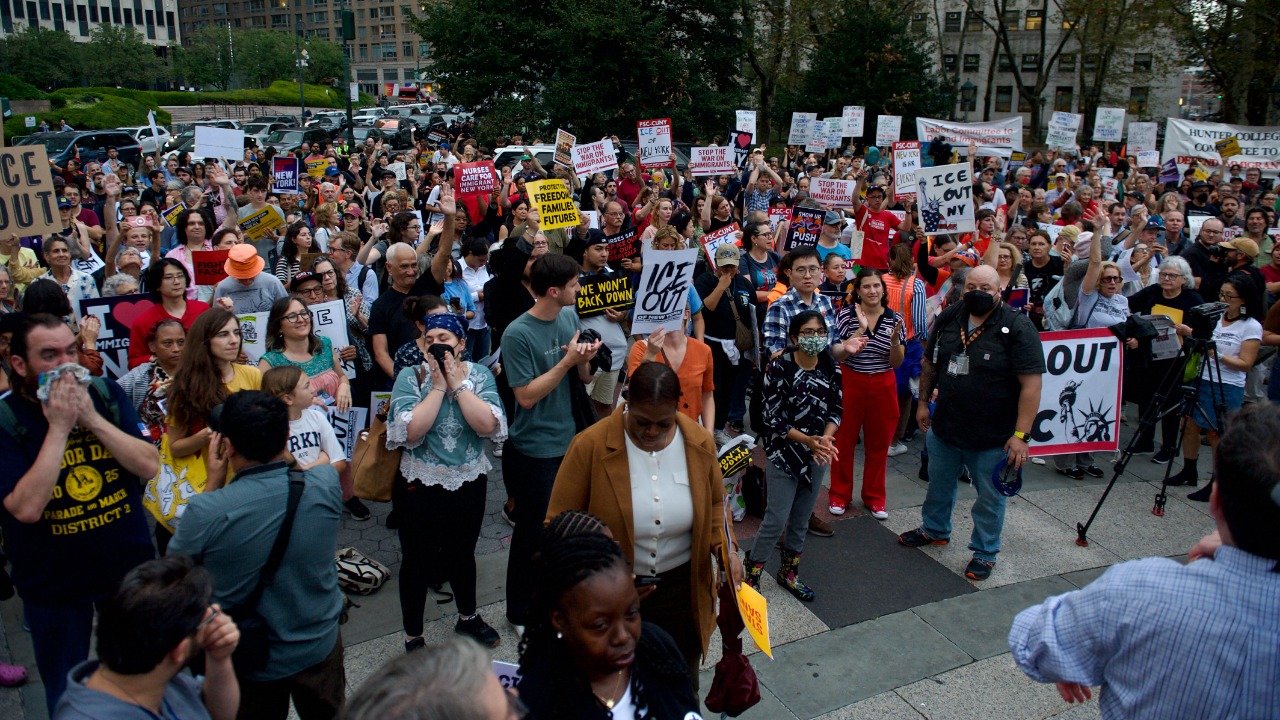
Thousands of demonstrators took to the streets across the United States on Friday in coordinated protests against federal immigration enforcement, with marches, walkouts, business closures and rallies reported from Minneapolis to Los Angeles, Portland, Birmingham and suburban Atlanta.
The day of action followed weeks of unrest tied to immigration operations in Minnesota and the fatal shooting of Alex Pretti, an intensive care nurse who was killed by federal agents in Minneapolis in January while recording their activity.
His death came less than a month after the fatal shooting of Renee Good, another U.S. citizen, during a separate encounter with federal immigration officers in the same city, incidents that have fueled protests and legal challenges over the conduct of enforcement operations.
A protest wave far beyond Minnesota
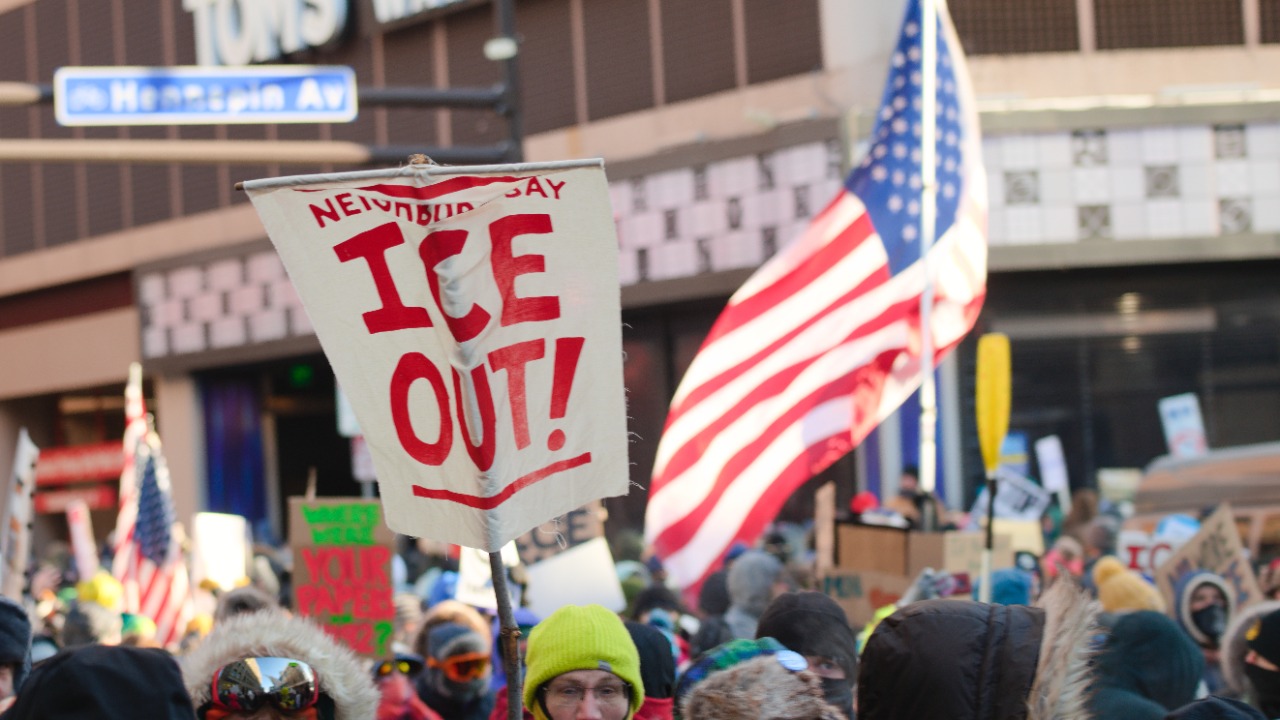
Reporting from Associated Press reporting showed protests that extended well beyond major cities. Demonstrators shut down schools and stores, staged student walkouts and joined rallies across multiple states.
The AP reported that thousands gathered in Los Angeles, while hundreds rallied in Minneapolis outside the Bishop Henry Whipple Federal Building, a focal point in the federal immigration enforcement dispute.
The demonstrations also reached communities not typically at the center of national protest coverage. In Birmingham, high school students walked out of class in subzero weather and marched about a mile to a business district. In Suwanee, students organized protests tied to immigration enforcement activity. In Portland, some businesses closed in solidarity, while local officials and faith leaders joined calls for changes to federal immigration policy.
Organizers described the effort as a “National Shutdown,” urging supporters to avoid work, school and shopping for the day. They said the action spanned all 50 states, with hundreds of events and participation from a wide range of groups.
The protests grew out of unrest in Minneapolis following the fatal shootings of Alex Pretti and Renée Good, two U.S. citizens killed during federal immigration enforcement operations in January. The deaths triggered protests, legal challenges and a widening dispute between state and federal authorities over the investigations.
Minneapolis remained the emotional center
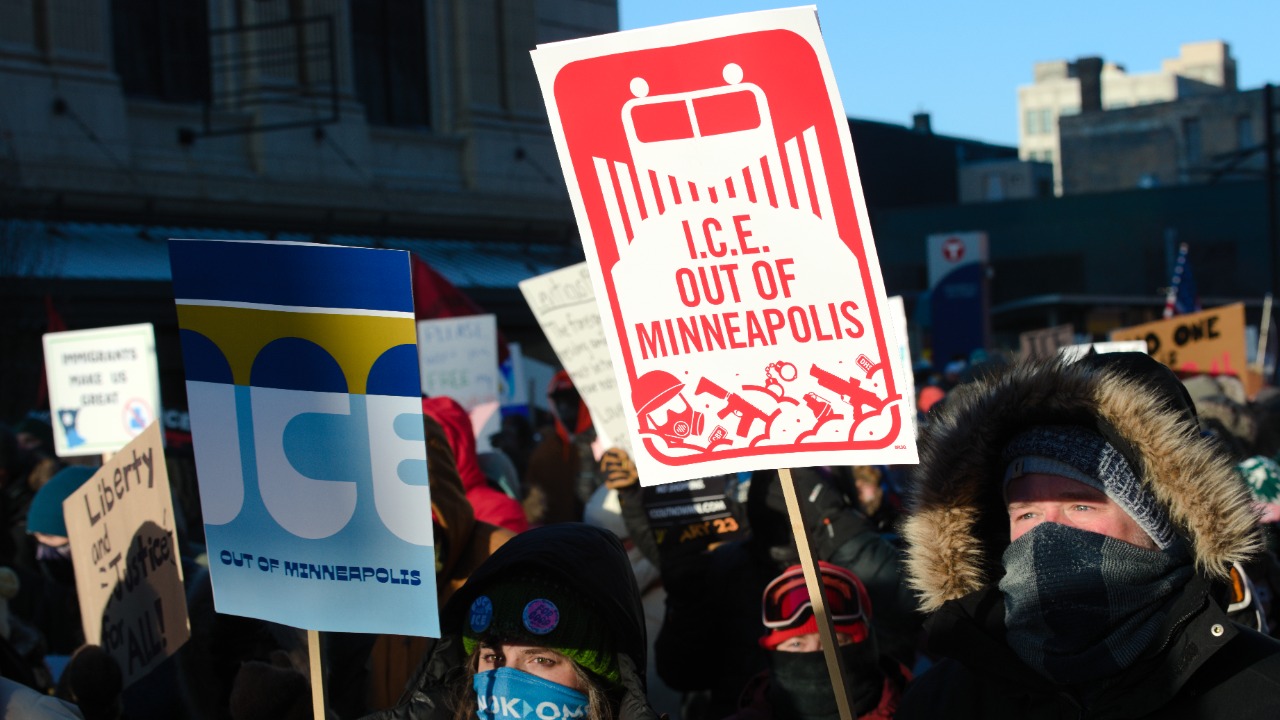
Even as protests spread nationwide, Minneapolis remained the emotional and political center of the movement. The city has been the focal point of Operation Metro Surge, a large federal immigration enforcement campaign that state and local officials say has disrupted neighborhoods, unsettled immigrant communities and led to repeated confrontations between residents and federal agents.
According to Reuters, the operation began in December and brought nearly 3,000 additional federal officers and agents into the Twin Cities area, making it one of the largest recent enforcement surges.
Federal officials have described the mission as a public safety effort. Critics, including local leaders and advocacy groups, say the scale and tactics have created fear beyond those directly targeted.
At Friday’s protest in Minneapolis, speakers from faith groups and community organizations addressed a crowd gathered in frigid conditions before demonstrators marched toward the federal complex. Reporting from The Associated Press said protesters jeered at Department of Homeland Security personnel and called for federal agents to leave Minnesota.
The tensions follow the January shootings of Alex Pretti and Renee Good, two U.S. citizens killed during federal immigration operations, incidents that have fueled protests, legal challenges and ongoing investigations.
The scene reflected how the debate has expanded beyond immigration policy into a broader argument over the scope and conduct of federal enforcement operations.
The shootings changed the stakes
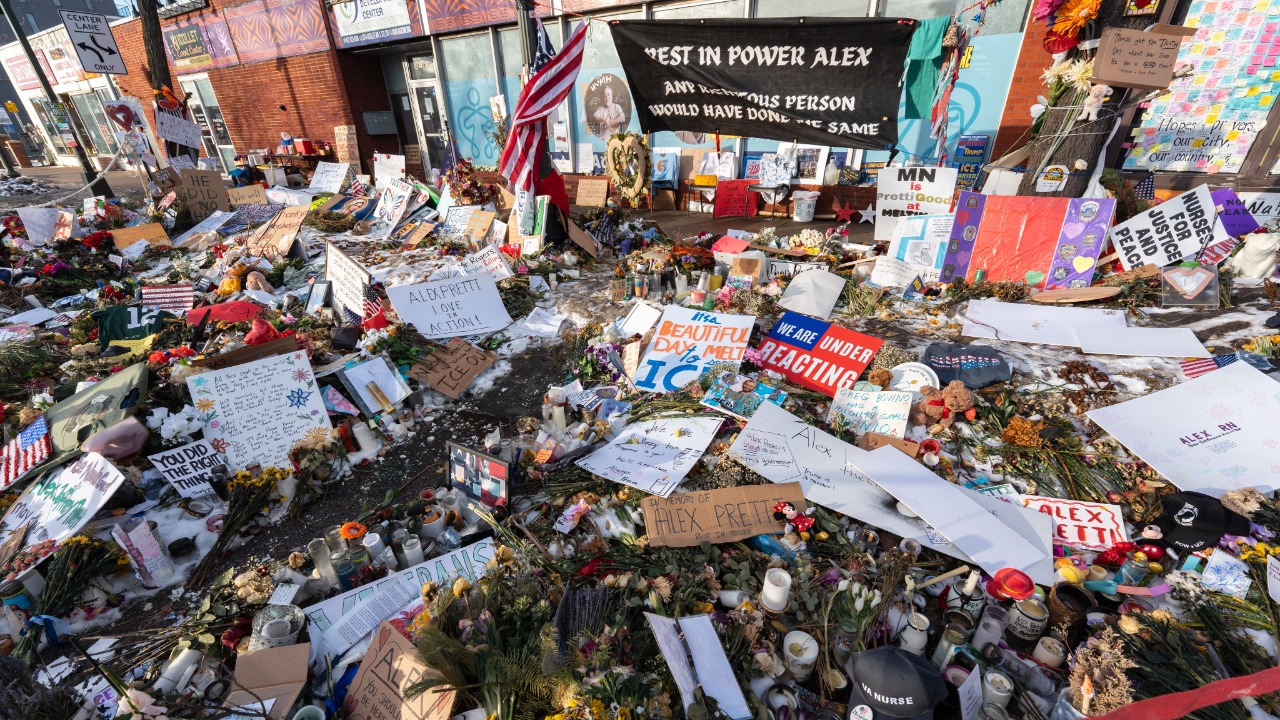
The nationwide protests did not emerge in isolation. They intensified after the killings of Alex Pretti and Renée Good, both U.S. citizens, in separate incidents involving federal immigration agents in Minneapolis.
Reporting from The Washington Post said demonstrations spreading nationwide followed the second fatal shooting of a U.S. citizen in Minneapolis in less than a month. The developments also drew federal scrutiny. The U.S. Department of Justice opened a civil rights investigation into Pretti’s killing, according to Reuters.
The shootings have become central to the protest movement’s momentum. Demonstrators and civil rights advocates point to the incidents as examples of excessive force and a lack of accountability, while federal officials have maintained that agents acted in self-defense in at least some encounters.
A review by Reuters found that official accounts of several violent encounters involving immigration agents were later contradicted by video or other evidence, further intensifying scrutiny and public distrust.
Together, those developments have shifted the protests beyond a policy dispute over immigration enforcement into a broader national debate over the use of force and oversight of federal agents.
The courts are now part of the fight
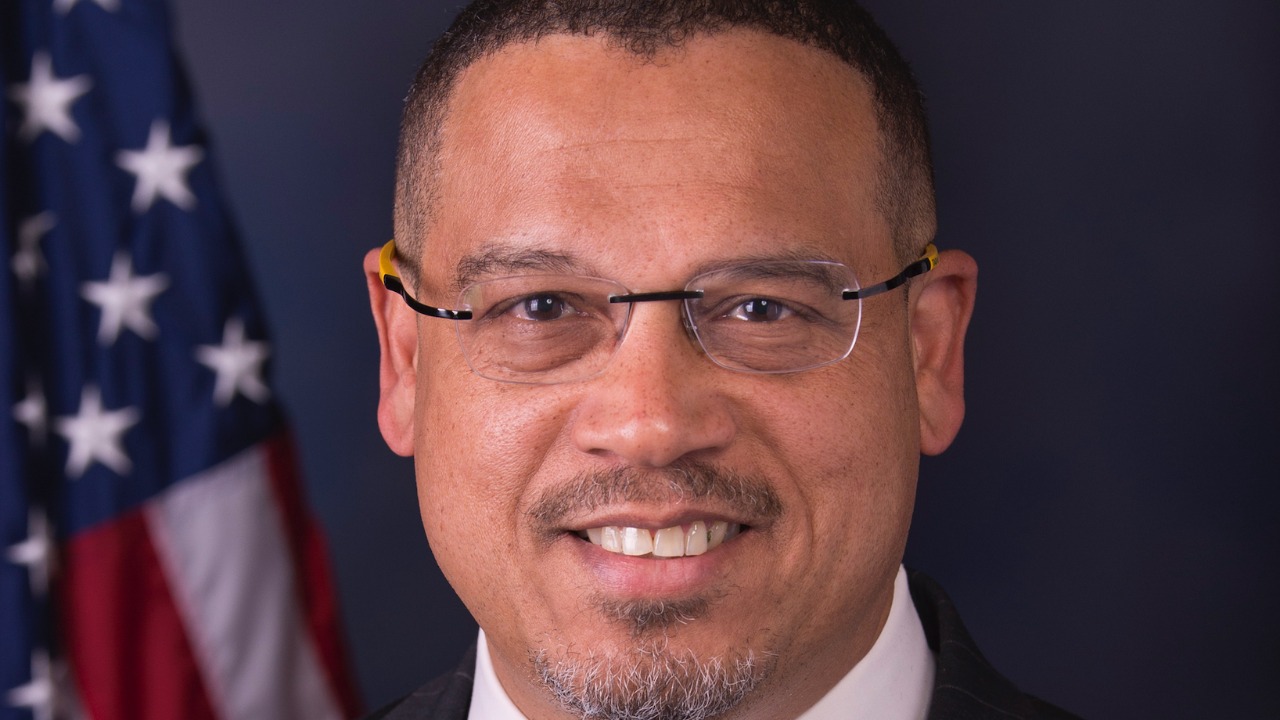
The protests have also moved into the courts. Keith Ellison, joined by Minneapolis and St. Paul, sued the federal government in an effort to halt or limit Operation Metro Surge.
Reporting from The Associated Press said the lawsuit argued the enforcement surge had already led to a fatal shooting and sparked protests across the country.
The legal challenge highlights how the conflict has expanded beyond street demonstrations. It reflects a direct confrontation between federal authorities and state and local leaders, who argue the operation violates constitutional protections and undermines trust between communities and law enforcement.
A federal judge declined to immediately halt the crackdown, according to later reporting. The broader case, however, remains ongoing.
The protests in the streets and challenges in the courts underscore the scale of the dispute, showing that opposition to the enforcement campaign extends beyond public demonstrations to formal legal action by state and city officials.
More than one city, more than one grievance
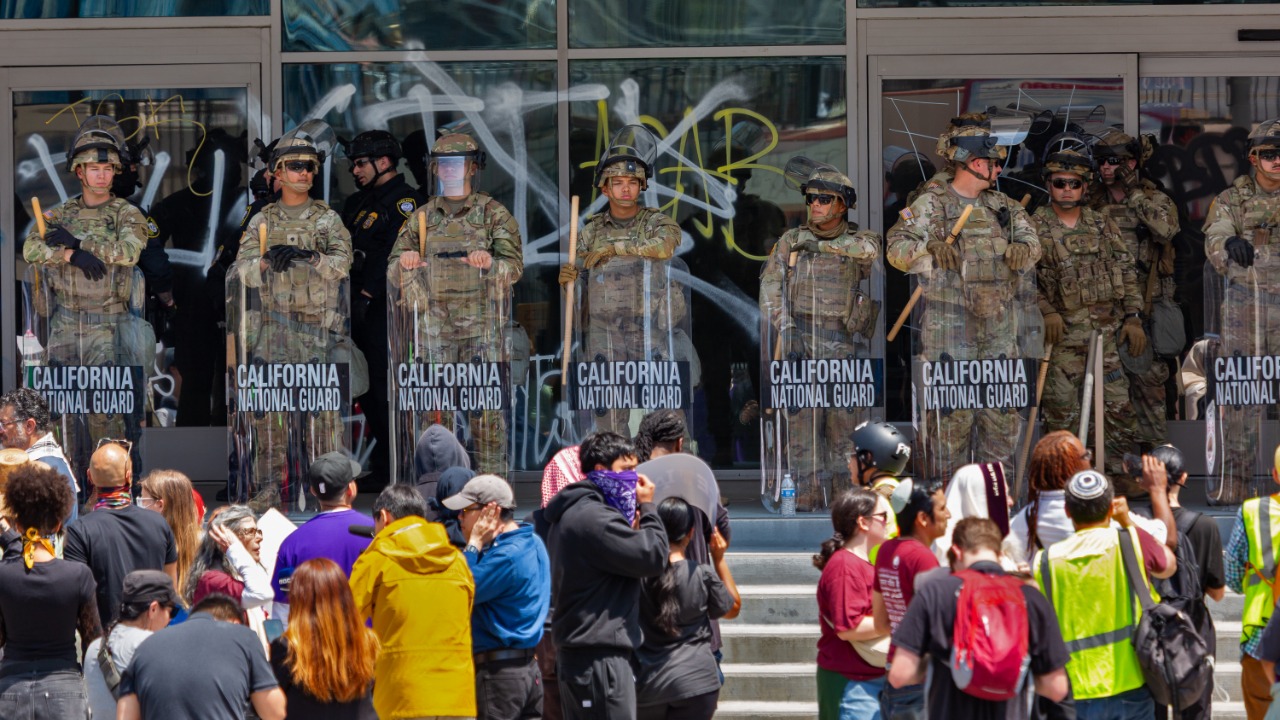
The breadth of Friday’s turnout underscored another point: this was no longer just a Minnesota story.
In Los Angeles, local outlets including the Los Angeles Times had previewed a slate of anti-ICE actions before the day began, reflecting how the response had spread well beyond the Midwest. By Friday afternoon, demonstrations had become a rolling national expression of opposition to deportation tactics, school and workplace disruptions, and what many immigrant communities describe as a climate of fear.
The administration and its allies have argued that stepped-up enforcement is necessary and lawful. Protesters, local officials and civil rights advocates have advanced a different view, saying the combination of raids, visible federal force and fatal encounters has raised broader concerns about the legitimacy of the crackdown.
Those concerns have been fueled in part by the January shootings in Minneapolis, where federal agents killed Alex Pretti and Renée Good during immigration enforcement operations, incidents that triggered protests and legal challenges across the country.
Friday’s demonstrations reflected how far that response has spread. What began as unrest tied to specific events in one city has evolved into coordinated action across multiple states.
Whether the movement leads to policy changes remains unclear. What is clear is that opposition to ICE tactics is no longer confined to activist networks or a single metro area. It has become a sustained, national protest movement.