

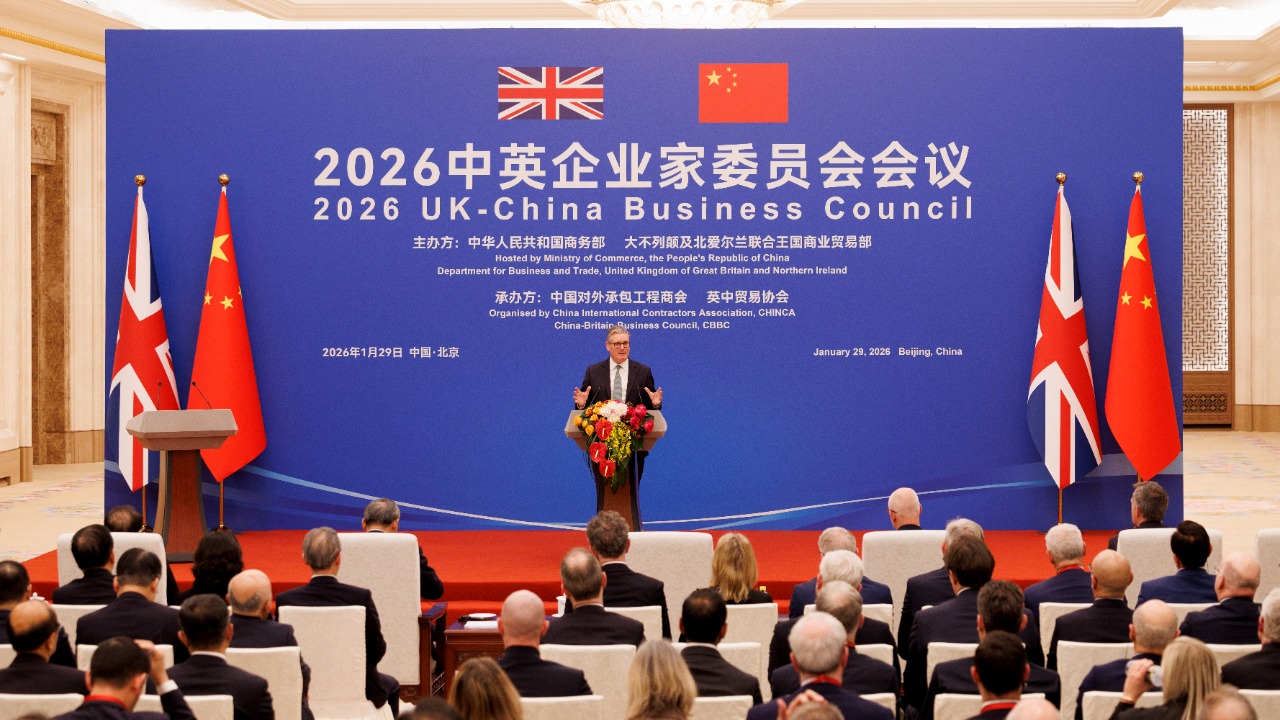
UK Prime Minister Keir Starmer began a four-day visit to China on Wednesday with a delegation of nearly 60 British businesses and cultural organisations, opening one of the most closely watched diplomatic trips of his premiership. The visit is the first by a British prime minister to China in eight years and lands at a moment when governments across Europe are trying to protect growth, manage security concerns and respond to a less predictable global trading environment.
For Starmer, the opening message was deliberately practical. This is not being sold as a reset built on warm rhetoric or grand promises. It is being framed as a focused effort to win trade, attract investment and rebuild a working relationship with the world’s second-largest economy without pretending that the areas of tension have disappeared. That balance is what makes the trip politically significant at home and strategically sensitive abroad.
The commercial emphasis was clear before Starmer even arrived. In announcing the visit, the UK government said he would travel to Beijing and Shanghai accompanied by nearly 60 British businesses and cultural organisations. The delegation included names from finance, pharmaceuticals, advanced manufacturing and the arts, with the government arguing that engagement with China should be judged through the lens of jobs, exports and economic opportunity in the UK.
A business-first opening to a high-stakes visit

That delegation is the clearest signal of what Downing Street wants from the trip. This is a business-heavy mission designed to show that Britain still sees room for commercial engagement with China even after years of mistrust over Hong Kong, espionage allegations, supply chain risks and Beijing’s ties with Moscow. Reuters reported that Starmer was travelling with more than 50 British business leaders and using the opening stage of the visit to encourage firms to seize opportunities in China while staying alert to security threats.
That language is central to the entire trip. Starmer’s government has repeatedly used the phrase “consistent, pragmatic partnership” to describe its approach. It is careful wording, and not by accident. It avoids the overly upbeat tone that once defined the so-called golden era of UK-China relations, but it also rejects the idea that Britain can simply disengage from such a large market. The pitch is that the relationship should be useful, bounded and grounded in the UK national interest.
The challenge is that every major Western government now talks about China in two voices at once. One is economic, focused on trade, investment and market access. The other is strategic, shaped by technology controls, security reviews and concern over political influence. Starmer’s visit is an attempt to show the UK can operate in both registers without losing credibility in either one. That is easier to describe than to execute.
Why London believes the trip is worth the risk

The reason for taking that risk is simple enough. Britain wants growth, and ministers see China as too large a market to ignore entirely. In its pre-visit briefing, the UK government said China is the UK’s third-largest trading partner and argued that British exports to China support hundreds of thousands of jobs. That framing is meant to make the case in concrete domestic terms. The government does not need voters to follow the finer points of trade policy. It needs them to understand the trip as part of a broader effort to improve economic performance.
That is also why the visit is built around sectors where Britain believes it has a competitive story to tell. Financial services, healthcare, life sciences, premium consumer brands, advanced manufacturing and the creative industries all fit neatly into the image Labour wants to project: modern, exportable British strengths that can create value without forcing the government into a broader strategic concession.
The Associated Press reported that Starmer’s visit was a balancing act between trade, national security and the wider political pressure created by Donald Trump’s return to the White House. That tension hangs over the trip whether British officials say it plainly or not. Any move by a close U.S. ally to deepen economic ties with Beijing will be read in Washington not just as a trade decision, but as a geopolitical signal.
The politics are as important as the itinerary
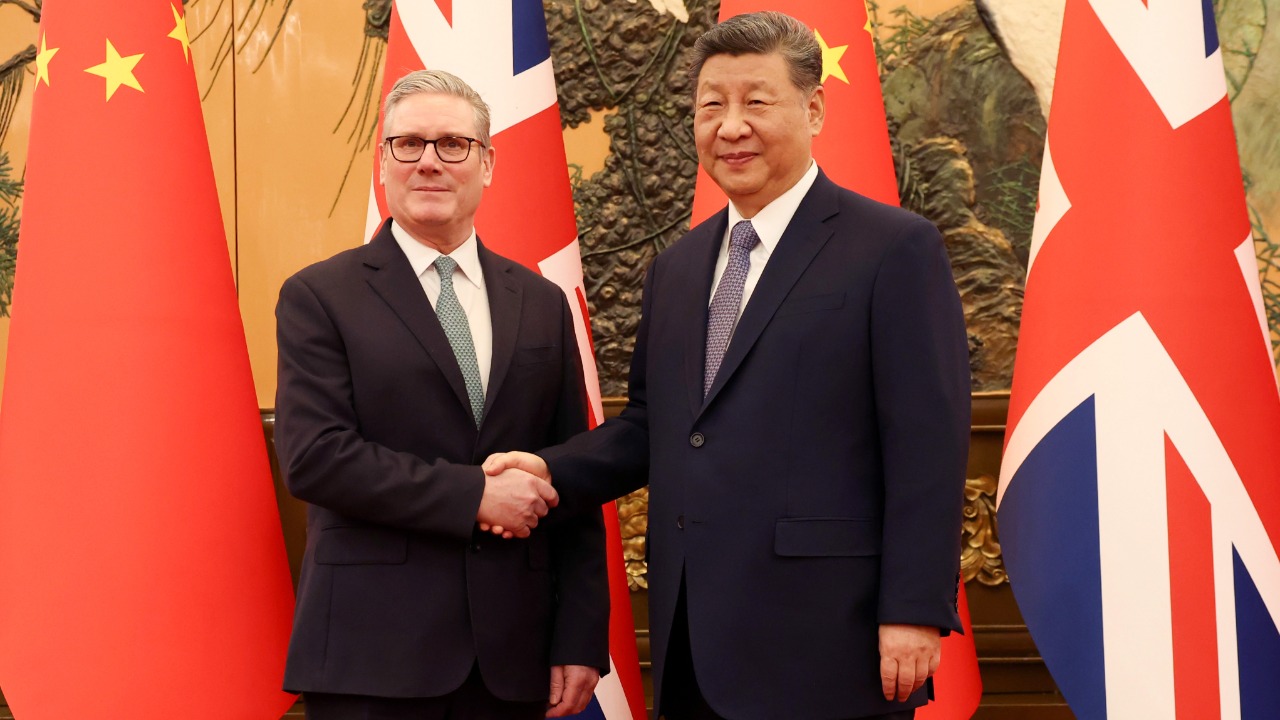
The trip matters because of what it says about Starmer’s instincts as much as what it may deliver on paper. He is trying to position himself as a leader who will deal with the world as it is, not as critics or ideologues wish it to be. On China, that means arguing that engagement is not a reward for Beijing but a tool for Britain. The political problem is that opponents can make the exact opposite case: that high-level engagement offers China legitimacy and leverage while giving London only uncertain economic returns.
That is why this visit will be judged less by ceremony than by substance. If British firms come away with credible pathways to new business, investment commitments or easier access in key sectors, Starmer can argue that his approach is delivering. If the trip produces mostly symbolism and carefully staged diplomacy, critics will say the government took on real political heat for too little practical gain.
There is also a deeper question beneath the daily headlines. Britain has spent years recalibrating its post-Brexit trade identity while trying to preserve close security ties with the United States and stable links with Europe. China sits awkwardly inside that equation. It is a major economic opportunity, but also a strategic complication. That is not a contradiction Starmer can solve in four days. What he can do is show which side of the argument he believes should lead: managed engagement rather than performative distance.
What comes next after the opening day

As the visit moves through Beijing and on to Shanghai, the real test will be whether the business-heavy opening turns into outcomes that feel tangible rather than aspirational. Trade missions often generate upbeat headlines before the harder work of approvals, contracts and implementation begins. For that reason, the strongest measure of success will not be the tone of the summit readouts but whether British companies later point to this trip as the moment negotiations moved from interest to action.
For now, though, the headline promise has been met. Starmer has begun a four-day China visit with nearly 60 British business and cultural organisations at his side, and he has made clear that the government wants the relationship judged on practical returns. In a period when major powers are forcing allies to choose words carefully and markets even more carefully, that is the story of the trip’s opening stage. Britain is not pretending China is an easy partner. It is betting that carefully managed engagement is still better than standing still.