Luigi Mangione’s two criminal cases over the killing of UnitedHealthcare CEO Brian Thompson are no longer headed for a summer courtroom collision. Instead, the New York state murder case is now scheduled for September, while the federal prosecution is lined up for October, pushing both proceedings deeper into the fall and giving the case a more staggered, but still tightly packed, path to trial.
That shift matters for more than calendar reasons. Mangione’s lawyers have spent months arguing that the original schedule left too little room to prepare for two serious cases built around the same killing, in two courthouses only blocks apart. The revised dates do not eliminate that pressure, but they do change the shape of the fight. What had looked like a near back-to-back sprint now looks more like a compressed relay, with the state case set to go first and the federal case waiting just behind it.
What changed
Following NYC/Pexels
According to Associated Press reporting from the April 1 hearings, New York Supreme Court Justice Gregory Carro moved the state trial from June 8 to Sept. 8, 2026. In federal court, U.S. District Judge Margaret Garnett pushed jury selection from Sept. 8 to Oct. 5, with opening statements and testimony set to begin Oct. 26.
The practical reason for the federal delay was easier to pin down than the state one. AP reported that Garnett said the federal schedule had to account for the overlap with the state prosecution, especially the time needed for Mangione and his lawyers to review juror questionnaires in the federal case. Reuters’ courtroom report added that Mangione’s lawyers had argued they could not fairly prepare for two complicated trials at once and had originally asked to push the federal case into 2027.
Carro did not spell out his reason for delaying the state case in open detail, which leaves some uncertainty around the exact trigger for that move. But the result is clear enough: instead of the state and federal proceedings running almost on top of each other, the calendar now puts a short gap between them, with the state case expected to start first.
Why the cases already look different than they did a year ago
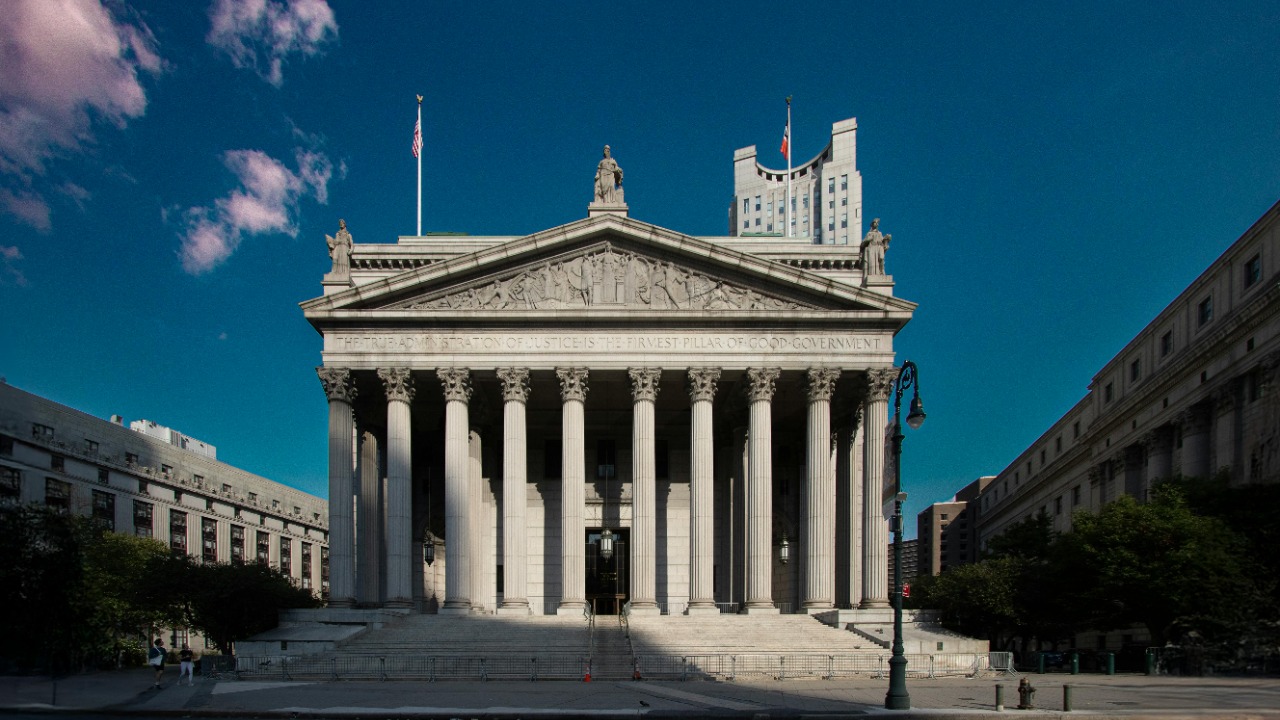
Image Credit: insignificunt1312 – CC BY-SA 4.0/Wiki Commons
One reason the schedule story matters is that both prosecutions have narrowed. In the state case, the most aggressive counts already fell away. In a published opinion in People v. Mangione, dated Sept. 16, 2025, Carro dismissed the first two counts of the indictment, ruling that the evidence did not establish the required intent to intimidate or coerce a civilian population or influence government policy under New York’s terrorism statute. The court left the remaining charges, including second-degree murder, in place.
That ruling matters because it removed one of the prosecution’s most politically charged theories. The state case is still grave, but it is no longer a test of whether Thompson’s killing can be legally framed as terrorism under New York law. Carro’s opinion treated the shooting as a targeted homicide, not the kind of indiscriminate public violence the statute was designed to cover.
The federal case changed in a similarly important way. AP reported in February that Garnett had dismissed the federal charge of murder through use of a firearm, the count that had enabled prosecutors to seek the death penalty, and also dismissed a gun charge while leaving stalking counts that still expose Mangione to a possible life sentence. Federal prosecutors later said they would not appeal that ruling. That left the federal case serious, but no longer capital. The earlier push from Washington, including Attorney General Pamela Bondi’s April 2025 directive to seek the death penalty, is now part of the case’s history rather than its live trial posture.
Why the new dates matter
The headline is not really about a routine continuance. It is about whether two parallel prosecutions can be managed without overwhelming the defense or creating another round of legal fights over fairness. Mangione has already complained in court that the state and federal actions amount to “the same trial twice,” and his lawyers have pressed that point in filings and hearings. The courts have not accepted that argument outright, but the scheduling changes show that both judges are dealing with the practical problem behind it.
The revised timeline helps, but only up to a point. AP reported that the state trial is expected to last four to six weeks. If that estimate holds, the federal case could still begin on the new schedule. If the state trial runs long, though, or if major evidentiary issues erupt midstream, the October federal calendar could come under pressure again. In other words, the new dates reduce the strain without making it disappear.
That is the key point the article needs to deliver on for readers. The significance of the delay is not just that both trials moved. It is that the judicial system is trying to thread a needle: give the defense more room, preserve the public’s interest in a timely case, and avoid letting either prosecution distort the other.
What comes next
KATRIN BOLOVTSOVA/Pexels
The next important developments are likely to come from pretrial rulings, not from dramatic new allegations. If formal scheduling orders or additional motion decisions flesh out why the state case moved, that will offer a clearer picture of whether the courts are informally coordinating or simply reacting to each other’s calendars in real time. Any rulings on overlapping evidence, witness issues, or renewed constitutional objections could also affect whether the current fall timetable actually holds.
For now, the cleanest way to understand the case is this: the state prosecution is still first, the federal prosecution is still coming right behind it, and both cases are narrower than they once appeared. The terrorism theory is gone in state court. The death penalty is gone in federal court. What remains is still a high-stakes homicide prosecution, but one that now looks more like a pair of hard-fought murder trials than the broader, more symbolically loaded legal showdown the case once seemed poised to become.
That makes the delay more than a procedural footnote. It is the latest sign that the legal battle over Thompson’s killing is being reshaped before a jury ever hears opening statements.
Cayla Corkill is a writer and editor contributing news and topical coverage at Overview Today. With a background in research, fact-checking, and editorial work, she brings a detail-oriented approach to every piece she publishes. Cayla holds a Bachelor's degree from Central Methodist University and continues to grow her editorial portfolio through consistent publication work.
Fort Worth police are investigating the killing of a 15-year-old South Hills High School student after gunfire ripped into a home in southwest Fort Worth early Thursday morning....
Two people were killed and three others critically injured after a shooting broke out during a high school hockey game at Dennis M. Lynch Arena in Pawtucket, Rhode...
Federal prosecutors in Boston have charged two Venezuelan nationals with conspiracy to commit bank theft in what authorities describe as a fast-moving ATM jackpotting operation that stretched across...
Charles “Sonny” Burton did not fire the shot that killed Doug Battle during a 1991 robbery at an Alabama auto parts store. By the state’s own account, Burton...
Mexican security forces have killed Nemesio Oseguera Cervantes, the longtime leader of the Jalisco New Generation Cartel, in what authorities described as one of the most consequential strikes...
Stay informed with today’s most important headlines from around the world. We bring you clear, up-to-date reports on politics, global events, culture, crime, lifestyle and more — all in one place.