U.S. forces captured Venezuelan President Nicolás Maduro and his wife, Cilia Flores, in a pre-dawn operation near Caracas, opening a volatile new chapter in Washington’s long confrontation with the Venezuelan government. The mission quickly became one of the most consequential foreign actions of President Donald Trump’s new term, not only because it ended with Maduro in U.S. custody, but because it fused military force, criminal prosecution, and regime pressure into a single dramatic strike. The immediate shock of the raid was matched by the stakes that followed. Within hours, Maduro was no longer a foreign leader defying Washington from Caracas. He was a federal criminal defendant headed to New York, where U.S. prosecutors have accused him and Flores of participating in conspiracies involving narcoterrorism, cocaine trafficking, and weapons offenses. The operation did not just remove a longtime adversary. It raised urgent questions about sovereignty, executive power, congressional oversight, and what kind of political vacuum might now emerge inside Venezuela.
Operation Absolute Resolve moved from planning to execution late Friday

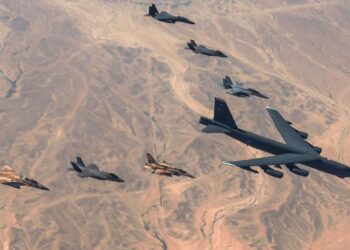
According to Reuters, Trump gave the final approval for the mission at 10:46 p.m. Eastern time on Friday after advisers and military planners had spent months preparing for the moment. Reuters reported that elite U.S. troops rehearsed the assault on a replica of Maduro’s safe house and that intelligence officials had developed an unusually detailed picture of his movements before the operation began. The same Reuters account said the United States launched more than 150 aircraft from 20 bases across the Western Hemisphere and used strikes against military targets around Caracas before Special Operations forces moved toward Maduro’s compound. Chairman of the Joint Chiefs of Staff Gen. Dan Caine said the helicopters reached the target area around 1 a.m. Eastern time, and Reuters reported that at least one aircraft took fire but remained operational. The description presented by U.S. officials was not of a broad invasion, but of a concentrated operation designed to seize Maduro and extract him before Venezuelan forces could effectively respond.
Maduro and Flores were taken into custody and flown to New York

After U.S. troops entered the residence, Maduro and Flores surrendered, according to The Associated Press, which cited U.S. officials describing a carefully rehearsed mission that included breaching equipment for steel-reinforced barriers. Reuters separately reported that by 3:20 a.m. Eastern time, the helicopters carrying the couple were over water and headed away from Venezuelan territory. The custody process then shifted from battlefield seizure to criminal prosecution. In a Jan. 5 courtroom update reported by AP, a government lawyer said Maduro and Flores were officially taken into law enforcement custody at 11:30 a.m. Saturday and that their plane landed in New York at 4:31 p.m. That timeline matters because it shows the administration was determined to frame the mission not as an open-ended occupation but as a fast military capture followed by a federal handoff.
The criminal case gave Washington its legal hook

The underlying charges are rooted in a long-running U.S. case against Maduro and other Venezuelan officials. A Justice Department indictment filed in the Southern District of New York accuses Maduro, Flores, and others of participating in conspiracies tied to narcoterrorism, cocaine shipments aimed at the United States, and related weapons conduct. Those allegations did not suddenly appear with the raid. What changed was the administration’s decision to use military force to bring the defendant into a U.S. courtroom. That distinction is crucial to how the story should be framed. The strongest version of this article does not need to claim that the operation clearly settled every legal question. It did not. The more accurate point is that the administration is relying on an existing federal criminal case as the formal basis for Maduro’s prosecution, while critics are already arguing that no domestic indictment automatically authorizes an armed seizure of a foreign head of state on sovereign territory. That legal clash is likely to shape the next phase of the story as much as the raid itself.
Congress was briefed, but only after the operation began
Questions about oversight surfaced almost immediately. Reuters reported that notifications to lawmakers began after the operation was already underway rather than beforehand, a detail likely to fuel arguments that the White House sidestepped customary consultation on a mission with obvious war powers implications. By Jan. 5, Reuters reported that Secretary of State Marco Rubio, Defense Secretary Pete Hegseth, and other senior officials had spent more than two hours briefing congressional leaders and the heads of national security committees on the Venezuela operation. Some Republicans quickly embraced the action. In a public statement, House Intelligence Committee Chairman Rick Crawford called Maduro’s arrest a historic day in the Western Hemisphere and compared it to the U.S. capture of Manuel Noriega. That comparison is politically useful for supporters because it places the operation in a recognizable American tradition of targeting leaders accused of criminal conduct. It also underscores how unusual the episode is, even by Washington’s own standards.
The regional and diplomatic consequences are only starting to emerge

The military success of the raid does not answer the harder question of what comes next inside Venezuela. Reuters reported days later that the Trump administration was describing a three-step approach focused on stabilization, recovery, and then a political transition. That language suggests Washington sees Maduro’s capture not as an isolated law enforcement event, but as the opening move in a broader effort to shape the country’s post-Maduro order. That is where the story becomes more complicated than a simple account of an overnight strike. Removing Maduro does not automatically produce a stable government, a clean democratic transition, or broad regional support. It creates an immediate power struggle in a country whose institutions, security services, and political factions were built around years of centralized control. Even Venezuelans who opposed Maduro may see a U.S. military seizure on home soil as a profound test of national sovereignty. For Washington, the next phase is likely to be judged on two tracks: what happens in federal court and what unfolds inside Venezuela. The administration can point to a major operational success, but the wider political and diplomatic consequences will take longer to measure. Much will depend on whether a viable transition takes shape, how regional governments respond, and how U.S. courts handle the legal challenges that are now certain to follow. What is already clear is that Maduro’s capture has transformed a long-running standoff into a far more immediate contest over law, power, and legitimacy. The next stage will play out not only through military messaging, but through court proceedings, diplomatic pressure, and the decisions made inside Venezuela after Maduro’s removal.