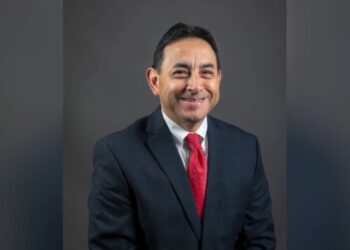
Ukrainian anti-corruption agents pulled former energy minister Herman Galushchenko off a Warsaw-bound train at the border on the night of February 15, stopping him from leaving the country while he was under investigation in a case involving more than $100 million in alleged kickbacks and laundered funds from the state nuclear company Energoatom. The arrest is the most dramatic turn yet in Operation Midas, a sprawling probe that has reached deep into President Volodymyr Zelenskyy’s inner circle and shaken Western confidence in Ukraine’s wartime governance at a moment when Kyiv desperately needs continued financial and military support.
Galushchenko, who led the energy ministry from 2021 to 2025 and then briefly served as justice minister before resigning over the scandal last year, was formally notified of suspicion for money laundering and participation in a criminal organization. Investigators say he sat at the top of the alleged hierarchy, not on its fringes. In intercepted recordings compiled during 15 months of surveillance, he reportedly appears under the call sign “Professor.” If convicted, he faces seven to 12 years in prison. The Specialized Anti-Corruption Prosecutor’s Office has asked the High Anti-Corruption Court to either arrest him or set bail at UAH 425 million, roughly $10 million.
Update: The National Anti-Corruption Bureau of Ukraine, @nab_ukr, announced this morning that it had officially charged former energy minister German Galushchenko with money laundering and participation in a criminal organization. It follows raids on his home and office last… https://t.co/DNi9Fj9nSo
— Christopher Miller (@ChristopherJM) February 16, 2026
How the “Barrier” Kickback System Worked
The scheme allegedly functioned like a tollgate on every contract flowing through Energoatom, a company whose annual revenue tops $5 billion. According to the National Anti-Corruption Bureau of Ukraine (NABU), contractors were required to kick back 10 to 15 percent of each contract’s value or face losing the deal entirely, a shakedown investigators internally called the “shlahbaum,” or barrier.
The alleged organization’s roster, according to charging documents, included a businessman who served as its leader, a former advisor to the energy minister, an Energoatom security executive, and back-office staff who handled the laundering. Five people were detained in the initial phase. Investigators say the network of intermediaries and shell firms stretched far beyond those early arrests.
The dirty money did not stay in Ukraine. According to NABU’s periodic reporting, a Kyiv-based laundering operation converted inflated contract payments into offshore assets worth upward of $112 million. The offshore architecture allegedly included a fund established in Anguilla in February 2021 and shell companies registered in the Marshall Islands, placing the money beyond the reach of Ukrainian regulators. About $7.4 million was transferred to accounts allegedly controlled by Galushchenko’s family, with a further $1.7 million in Swiss francs and roughly $2.85 million in euros paid out in cash and wired directly to the family in Switzerland. Investigators conducted more than 70 searches and compiled over a thousand hours of recordings to build the case, tracking payments across multiple jurisdictions and through layers of nominal owners.
The Zelenskyy Connection
The alleged ringleader of the network is not Galushchenko but Timur Mindich, a businessman and former close associate of President Zelenskyy from his pre-political media career. Mindich co-owned Kvartal 95, the TV production company that made Zelenskyy famous. He fled Ukraine just hours before NABU raided his home in November 2025 and is believed to have gone to Israel. He has denied wrongdoing.
The political fallout has been severe. Andriy Yermak, Zelenskyy’s powerful chief of staff throughout the full-scale war, resigned after investigators searched his home, though neither he nor the president have been accused of wrongdoing. Former Deputy Prime Minister Oleksiy Chernyshov was arrested on suspicion of illicit enrichment. Ukraine’s current energy minister, Svitlana Grinchuk, also submitted her resignation at Zelenskyy’s demand after she was linked to Galushchenko’s influence. In a matter of months, Operation Midas has forced out or detained some of the most senior figures in Ukraine’s wartime government.
⚡️Operation ‘Midas’: #NABU, #SAPO exposed a high-level criminal organization operating in the energy sector. Its members: current and former officials, a well-known businessman, others. The activities were centered around bribe-taking and money laundering🔇https://t.co/xPwhXgZBuV
— NAB Ukraine (@nab_ukr) November 11, 2025
Operation Midas
Timeline of a Wartime Corruption Scandal
FEBRUARY 2021
Offshore fund registered in Anguilla. Investigators say this is when the laundering architecture was established, with shell companies later set up in the Marshall Islands.
2021 – 2025
Herman Galushchenko serves as Ukraine’s Energy Minister. The alleged “barrier” kickback system extracts 10–15% from Energoatom contracts throughout this period.
MID-2024
NABU opens Operation Midas. A 15-month covert investigation begins, producing over 1,000 hours of intercepted recordings.
NOVEMBER 10, 2025
NABU executes 70+ simultaneous raids across Ukraine. Timur Mindich, the alleged ringleader, flees to Israel hours before agents reach his home. Five suspects detained.
LATE 2025
Political shockwave. Chief of staff Andriy Yermak resigns after his home is searched. Deputy PM Oleksiy Chernyshov arrested. Energy Minister Svitlana Grinchuk forced out. Galushchenko resigns as Justice Minister.
FEBRUARY 15, 2026
Galushchenko pulled off a Warsaw-bound train at the Ukrainian border overnight. Served with formal suspicion the following morning for money laundering and participation in a criminal organization.
FEBRUARY 17, 2026
Anti-corruption court hears SAPO’s request to arrest Galushchenko or set bail at UAH 425 million (~$10 million). Investigation ongoing, with cooperation from 15 countries.
Border Arrest and the Martial Law Factor
Under Ukraine’s martial law, most men under 60 are barred from leaving the country without special permission. Anti-corruption officials treat unauthorized departures as potential flight from justice, and Galushchenko’s attempt to board a westbound train gave investigators the opening to move. He was pulled off the train overnight and served with formal suspicion the next morning.
The Financial Times reported that Galushchenko resigned from his justice ministry post after the scandal surfaced, though some local accounts dispute the exact timeline. That kind of ambiguity is itself revealing: in wartime Kyiv, even the sequence of a resignation carries political weight.
Energoatom, which generates a significant share of Ukraine’s electricity through its fleet of nuclear plants, has not publicly indicated that the probe disrupted operations or safety protocols. That matters. Ukraine’s nuclear infrastructure is already under strain from Russian strikes on the energy grid, and any suggestion that the corruption investigation could compromise power generation would alarm both domestic audiences and international partners.
What It Means for Western Aid
The Energoatom scandal lands as Ukraine is trying to convince skeptical legislators in Europe and North America that new rounds of financial and military support will not be siphoned off by insiders. NABU and the Special Anti-Corruption Prosecutor’s Office argue the investigation proves their independence. They have gone after senior figures in the defense and infrastructure sectors even as Russian missiles continue hitting major cities.
But the revelations also show how deeply entrenched rent-seeking remains in the nuclear industry, where opaque procurement and complex technical contracts make it easy to pad invoices. An Associated Press investigation into nuclear-sector graft found that Western partners have long worried about Energoatom’s vulnerability to political interference, concerns that Operation Midas appears to confirm.
For donor governments, the case is likely to fuel calls for tighter conditions on aid: more intrusive auditing of large state-owned enterprises, stricter disclosure rules for senior officials, and direct oversight of nuclear-fuel procurement and cross-border energy trading. Western capitals have already pushed Kyiv to expand NABU’s powers and shield prosecutors from political retaliation, framing anti-corruption reform as a prerequisite for eventual European Union membership.
Ukrainian officials insist that high-profile arrests show the system is working, not failing. Western diplomats, for their part, are cautious about undermining a government fighting for survival. The real test is whether Operation Midas ends with credible trials and recovered assets, or quietly dissolves into plea deals and rehabilitated reputations. The answer will shape how much trust Kyiv can still command, both at home and with the allies bankrolling its defense.