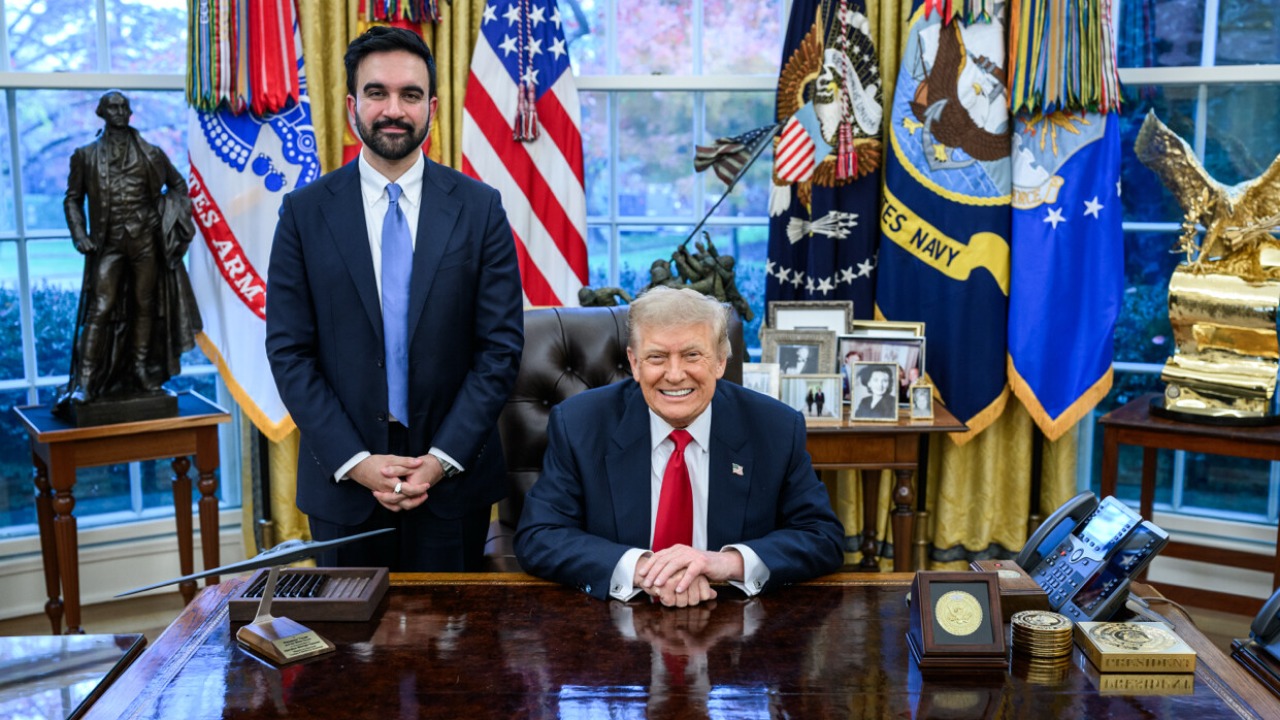
Zohran Mamdani’s path to City Hall was not supposed to look like this. He began the 2025 mayor’s race as a little-known state assembly member from Queens, running openly as a democratic socialist in a city that often leans toward caution.
By Election Day, he had defeated a field that included former Gov. Andrew Cuomo and gone from protest candidate to mayor-elect.
Just after midnight on New Year’s Day, he took the oath of office in the decommissioned Old City Hall subway station, becoming New York City’s first Muslim mayor and signaling that his administration wanted its opening image to feel different from the start.
The symbolism was unmistakable, but Mamdani’s first weeks in office have also made clear that he wants to be judged on whether a campaign built around affordability can produce actual policy.
His early moves have centered on the same promise that powered his rise: that city government should do more, and do it more directly, for working families squeezed by rent, child care costs and the daily price of staying in New York.
From Long Shot to Winner
Zohran Mamdani’s victory was one of the most striking municipal upsets in years. The Associated Press called the race for him on election night after he defeated former Gov. Andrew Cuomo, who ran on his own third-party line, and Republican Curtis Sliwa.
The city’s certified general election results show Mamdani received 944,950 votes on the Democratic line and another 169,234 on the Working Families line, far ahead of Cuomo’s 906,614 and Sliwa’s combined Republican and Protect Animals total.
That result mattered beyond the usual political drama of a big-city race. Cuomo entered with universal name recognition and the kind of establishment profile that has long shaped New York mayoral contests.
Mamdani countered with a campaign built around renters, younger voters, neighborhood organizing and an argument that cost-of-living pressure had become the city’s defining issue.
His win suggested that, at least in this election, a candidate promising more aggressive government intervention on everyday affordability could outrun both institutional strength and familiarity.
An Inauguration Designed to Send a Message
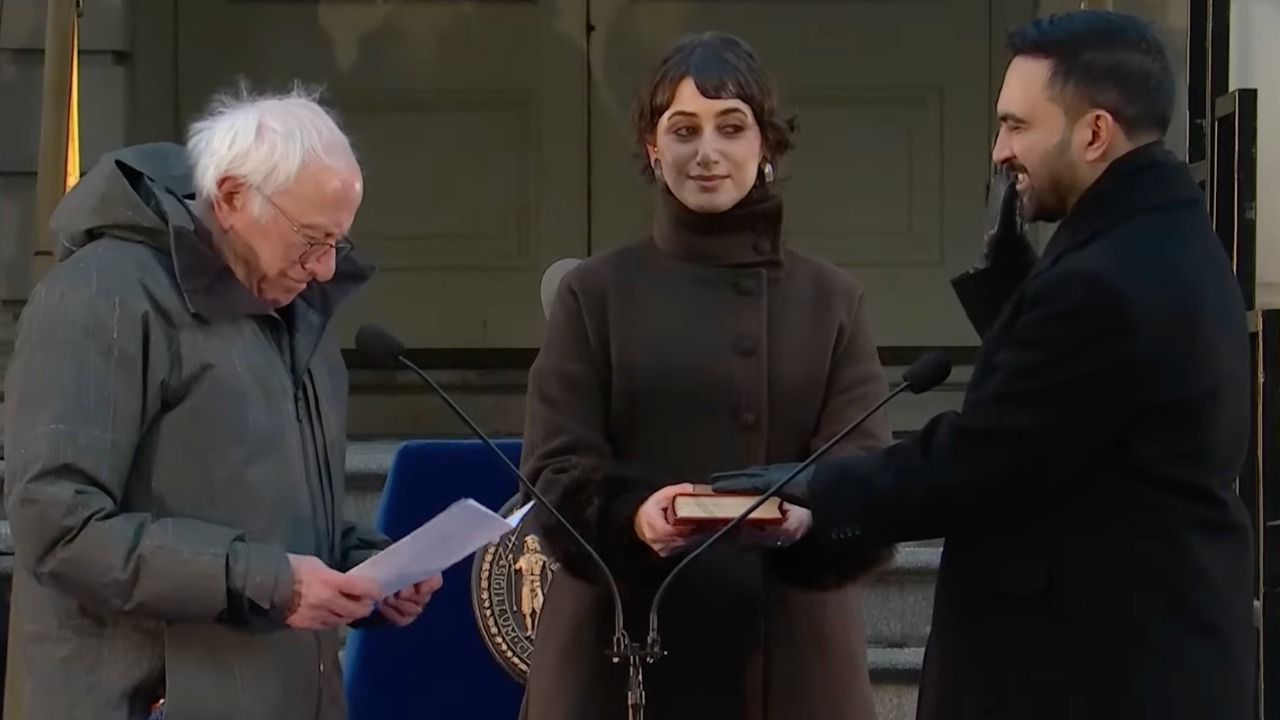
Zohran Mamdani took office in a private midnight ceremony at the Old City Hall subway station, an unusual setting that immediately distinguished the moment from the more conventional pomp of earlier mayoral transitions.
CBS New York reported that he was sworn in there by New York Attorney General Letitia James as the clock turned over, while NPR, via member station coverage, described the decommissioned station as a deliberately symbolic choice for a candidate who tied much of his political identity to public transit and working-class New Yorkers.
The oath itself also drew national attention. The AP reported reported that Mamdani took office using Qurans tied to both family and New York history, underscoring the milestone embedded in his inauguration. But the more revealing part of the inauguration was the way Mamdani tried to fuse symbolism with a governing argument: that New York should be ambitious again, and that government should feel present in people’s daily lives rather than distant from them
What He Said He Wants to Do
In his inaugural address published by City Hall, Mamdani framed affordability as the organizing mission of his administration. The speech was broad enough to sound ceremonial, but specific enough to show the priorities he wanted attached to his first days in office: housing, child care, public services, and a more active relationship between residents and City Hall. The tone was less managerial than mobilizing. He was not presenting himself as a caretaker mayor inheriting a machine. He was presenting himself as someone elected to change how the machine operates. That posture came through again almost immediately. On January 2, the mayor announced the creation of the which City Hall described as a new office intended to rethink how New Yorkers participate in municipal government. In the administration’s official transcript, Mamdani said the point was to move beyond the idea that residents interact with government only when they file complaints or show up after a decision has already been made. That sounds abstract, but the premise is politically important. New York’s government is large, layered, and often reactive. Residents know how to call 311 when something breaks. They are less often invited into the process before priorities are set. Mamdani is betting that the gap between those two experiences is not just a civic problem but a governing one. If the office becomes a genuine organizing arm for participation, it could become one of the more distinctive experiments of his term. If it turns into branding without leverage, critics will dismiss it as a polished version of outreach the city already claims to do.
In his inaugural address published by City Hall, Zohran Mamdani framed affordability as the organizing mission of his administration. The speech was broad enough to sound ceremonial, but specific enough to show the priorities he wanted attached to his first days in office: housing, child care, public services and a more active relationship between residents and City Hall.
The tone was less managerial than mobilizing. He was not presenting himself as a caretaker mayor inheriting a machine. He was presenting himself as someone elected to change how the machine operates.
That posture came through again almost immediately. On Jan. 2, the mayor announced the creation of the Office of Mass Engagement, which City Hall described as a new office intended to rethink how New Yorkers participate in municipal government.
In the administration’s official transcript, Mamdani said the point was to move beyond the idea that residents interact with government only when they file complaints or show up after a decision has already been made.
That may sound abstract, but the premise is politically important. New York’s government is large, layered and often reactive. Residents know how to call 311 when something breaks. They are less often invited into the process before priorities are set.
Mamdani is betting that the gap between those two experiences is not just a civic problem but a governing one. If the office becomes a genuine organizing arm for participation, it could become one of the more distinctive experiments of his term. If it turns into branding without leverage, critics will dismiss it as a polished version of outreach the city already claims to do.
The First Major Policy Test
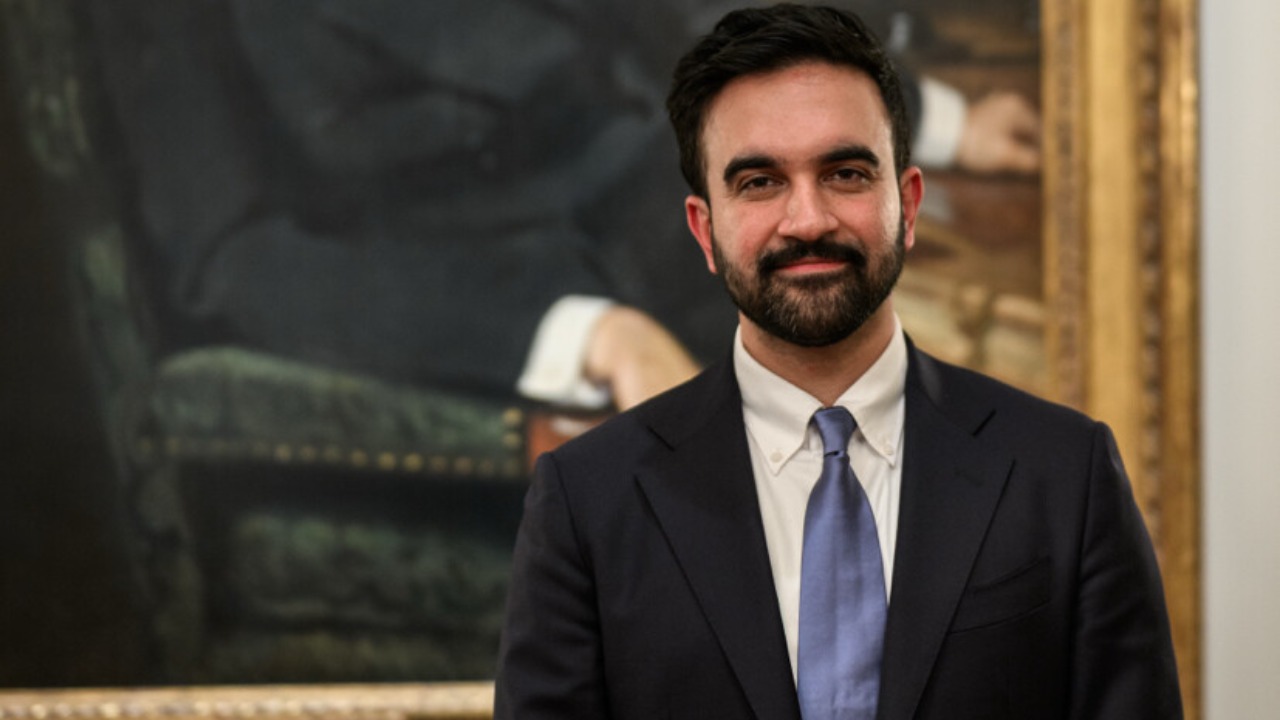
The sharpest early measure of whether Zohran Mamdani can convert campaign language into something concrete arrived with child care. On March 3, he and Gov. Kathy Hochul announced what the governor’s office called a major milestone toward launching free child care for all 2-year-olds in New York City.
The announcement included the first four communities slated to receive 2,000 2-K seats this fall, turning one of Mamdani’s biggest campaign promises into an initial state-city rollout rather than a distant aspiration.
The politics of that move are straightforward. Child care costs in New York can function like a second rent, especially for families with toddlers, and Mamdani built much of his campaign around the idea that government should lower the fixed costs of living in the city.
The policy challenge is more complicated. Expanding access means funding seats, working with providers, staffing classrooms and sustaining the program once the opening announcement fades from headlines. That is where mayoral ambition typically collides with the slower machinery of budgets and implementation.
Still, as a first-month governing marker, the child care announcement matters because it gives Mamdani something more substantial than rhetoric. It shows movement on a promise voters could easily understand and puts him on terrain where success or failure will be visible in ordinary household economics rather than abstract ideological debate.
What the Historic Label Really Means
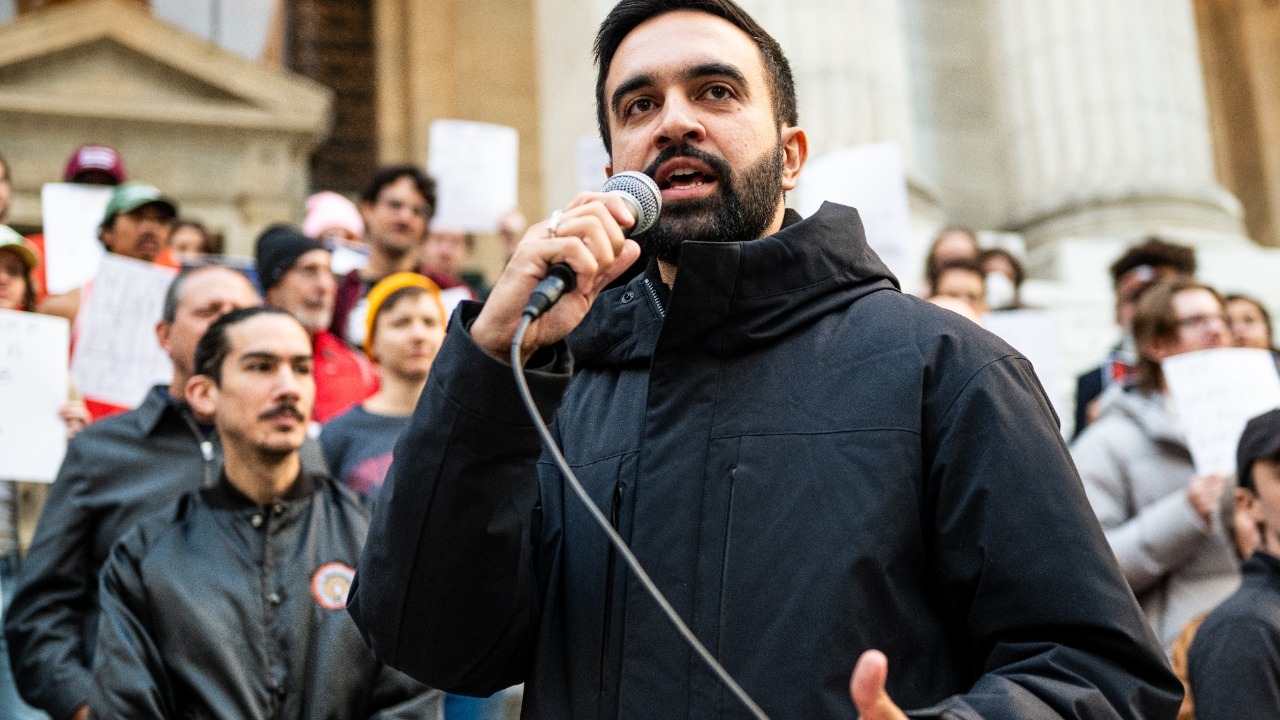
The phrase “first Muslim mayor” is not incidental to Zohran Mamdani’s story, but it is also not sufficient on its own. Representation can reshape who feels seen in public life, and in New York that matters. A mayor’s background can change who believes City Hall was built for them.
But the durability of a historic victory is usually decided less by the milestone than by what follows it. That is why Mamdani’s opening stretch has been closely watched. The election made history. The swearing-in amplified it.
The harder question is whether his administration can turn that symbolic break into a practical one for families who measure politics by rent bills, school options, transit and whether public agencies seem responsive.
Early signs suggest he understands the stakes. His first actions have been aimed less at headline-friendly confrontation than at building a case that local government can reduce pressure in daily life.
For now, that case remains a work in progress. But the broad outline is clear. Mamdani did not arrive at City Hall as a caretaker or consensus pick. He arrived as the candidate who argued that New York had become too expensive, too inaccessible and too resigned to incremental fixes.
His first weeks in office have kept that argument intact. The next phase will determine whether he can make it feel less like a campaign thesis and more like a governing record