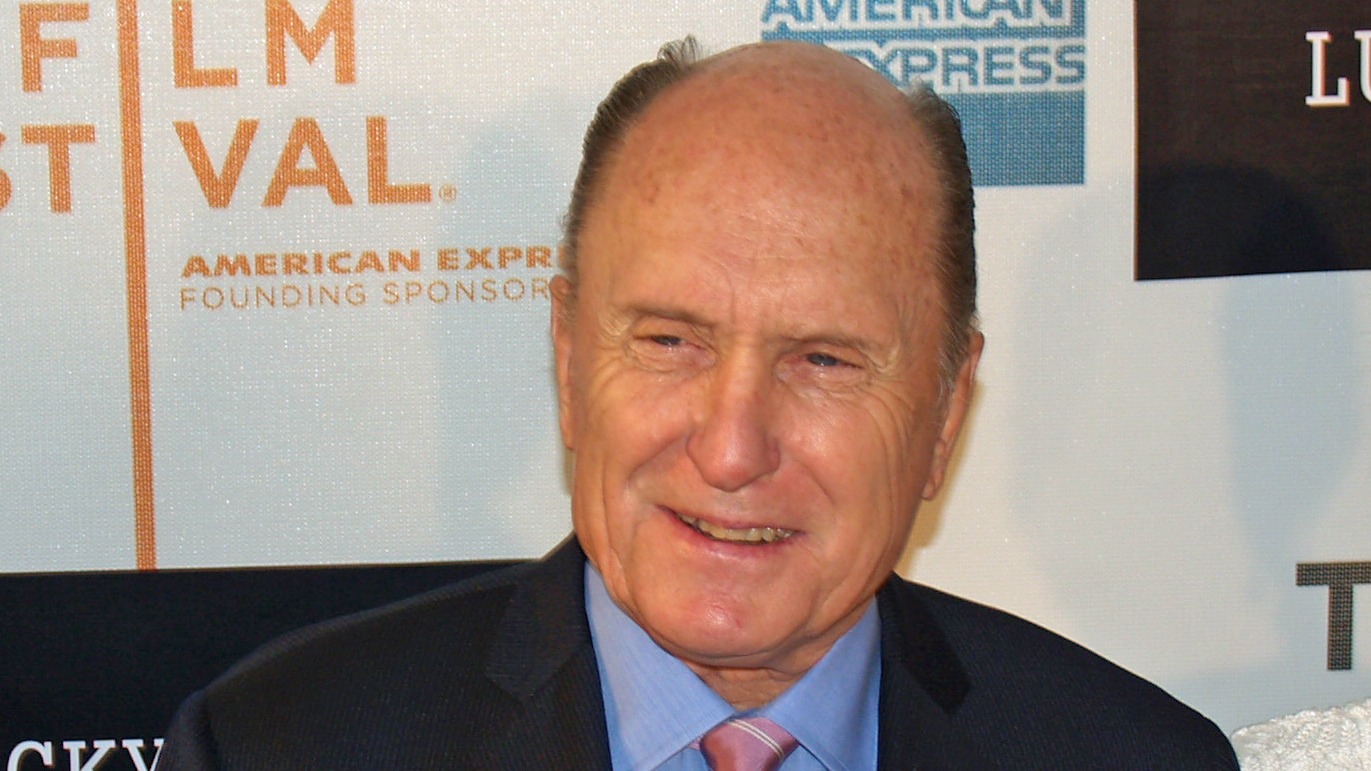
Robert Duvall, the actor who brought Tom Hagen, Lieutenant Colonel Kilgore, and a washed-up country singer named Mac Sledge to life with equal conviction, died on February 15, 2026, at the age of 95. He passed peacefully at his longtime horse farm in Middleburg, Virginia, with his wife Luciana at his side.
“Yesterday we said goodbye to my beloved husband, cherished friend, and one of the greatest actors of our time,” Luciana Duvall said in a statement shared on Facebook.
Over seven decades in front of the camera, Duvall built one of the most respected bodies of work in American film. He won the Academy Award for Best Actor in 1984 for Tender Mercies, collected two Emmys, four Golden Globes, and a BAFTA, and earned seven Oscar nominations in total. But awards only tell part of the story. Directors came back to him again and again because he did something rare: he made you forget you were watching a performance at all.
The Actor Who Never Played Himself
Watch Tom Hagen in The Godfather, the calm, careful consigliere who keeps the Corleone machine running while everyone around him loses control. Then watch Kilgore in Apocalypse Now, the surf-obsessed colonel who orders a napalm strike and grins through the smoke. Then watch Mac Sledge in Tender Mercies, a man so beaten down by life that even his silences feel heavy. It is hard to believe you are looking at the same person in all three films.
That was the trick, and it was not really a trick at all. Duvall did not rely on mannerisms or a signature screen presence. He studied people. He listened. When he played a country singer, he learned to sing. When he played an Argentine tango dancer in Assassination Tango, he spent months learning the dance. He once said in an interview that the key to acting was “living truthfully under imaginary circumstances,” and he took that literally in ways most of his peers did not.
Francis Ford Coppola, who directed Duvall in seven films starting with The Rain People in 1969, called him “such a great actor and such an essential part of American Zoetrope from its beginning.” That collaboration alone would be enough to secure a legacy. But Duvall kept working, kept choosing roles that interested him over roles that paid well, and kept showing up in films that surprised people decades after he could have coasted on reputation.
Hollywood Responds
The tributes came fast and from every corner of the industry.
Al Pacino, who shared the screen with Duvall across both Godfather films, called him “a born actor” and said his “phenomenal gift will always be remembered.” Robert De Niro, their co-star in The Godfather Part II, kept it simple: “God bless Bobby.”
"I love the smell of napalm in the morning!" RIP Robert Duvall
— Stephen King (@StephenKing) February 16, 2026
Adam Sandler, who worked with Duvall on the 2022 Netflix film Hustle, posted a slideshow of photos on Instagram and wrote that Duvall was “one of the greatest actors we ever had” and “such a great man to talk to and laugh with.” Michael Keaton, his co-star in The Paper, called him “greatness personified as an actor.” Viola Davis, who appeared alongside him in Widows, said working with him had been an honor. Walton Goggins, who starred in Duvall’s self-directed film The Apostle, called him “my North Star, my hero.”
SAG-AFTRA issued a statement noting that Duvall had been “twice honored with SAG-AFTRA Actor Awards” and that “his influence on the craft will endure.” BAFTA also released a formal tribute.
What stood out about the response was not the praise itself, which is standard when a major actor dies, but the consistency of it. These were not polite condolences. Person after person described Duvall as someone who had shaped how they understood acting. That kind of agreement across generations of performers, from Pacino to Sandler to Goggins, does not happen often.
A Kind of Filmmaking That Left With Him
Duvall’s best roles lived in a type of movie that Hollywood barely makes anymore: the mid-budget adult drama. Films like Tender Mercies, The Great Santini, The Apostle, and A Family Thing were built on long scenes, difficult conversations, and characters who carried real moral weight. They were not designed to launch franchises or sell merchandise. They existed because a studio believed that a great actor working with a great script was enough to put people in seats.
That math has changed. The movies that dominate theaters now are largely built around intellectual property, visual effects, and four-quadrant appeal. There are fewer and fewer opportunities for an actor to do what Duvall did, which was to carry an entire film on the strength of a quiet, fully inhabited performance. Some of that work has migrated to limited series on streaming platforms, and good work is being done there. But the experience of watching a Duvall performance on a big screen, patient and human and completely free of flash, is something the industry has largely moved past.
That is part of what people are grieving. Not just the man, but the world he worked in. Duvall did not chase fame. He lived on a horse farm in rural Virginia, far from the Hollywood circuit, and seemed genuinely uninterested in celebrity. He chased the work. And the work, at its best, was as good as anything American cinema has produced.
He is survived by his wife, Luciana Pedraza Duvall, and his children.