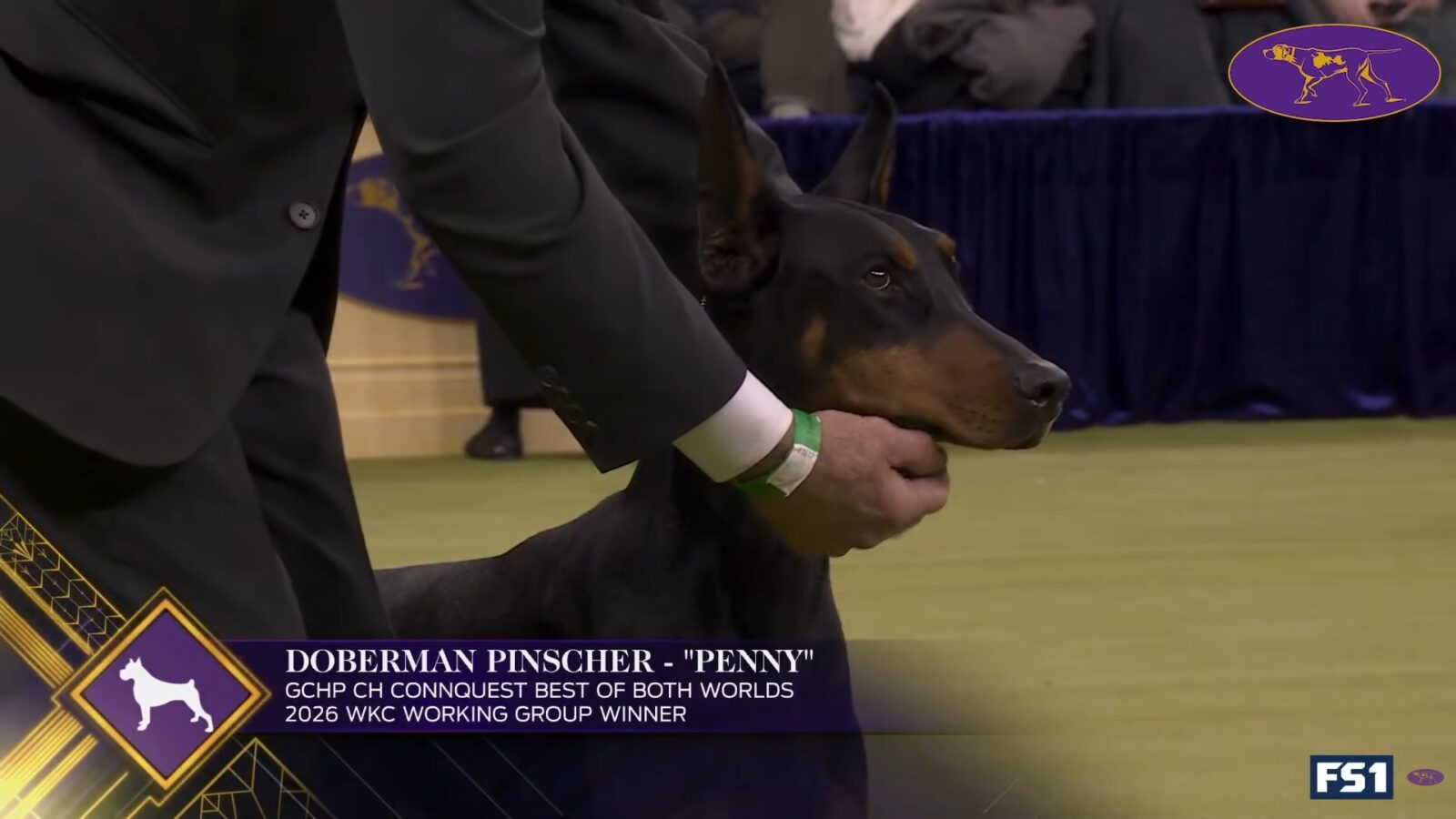
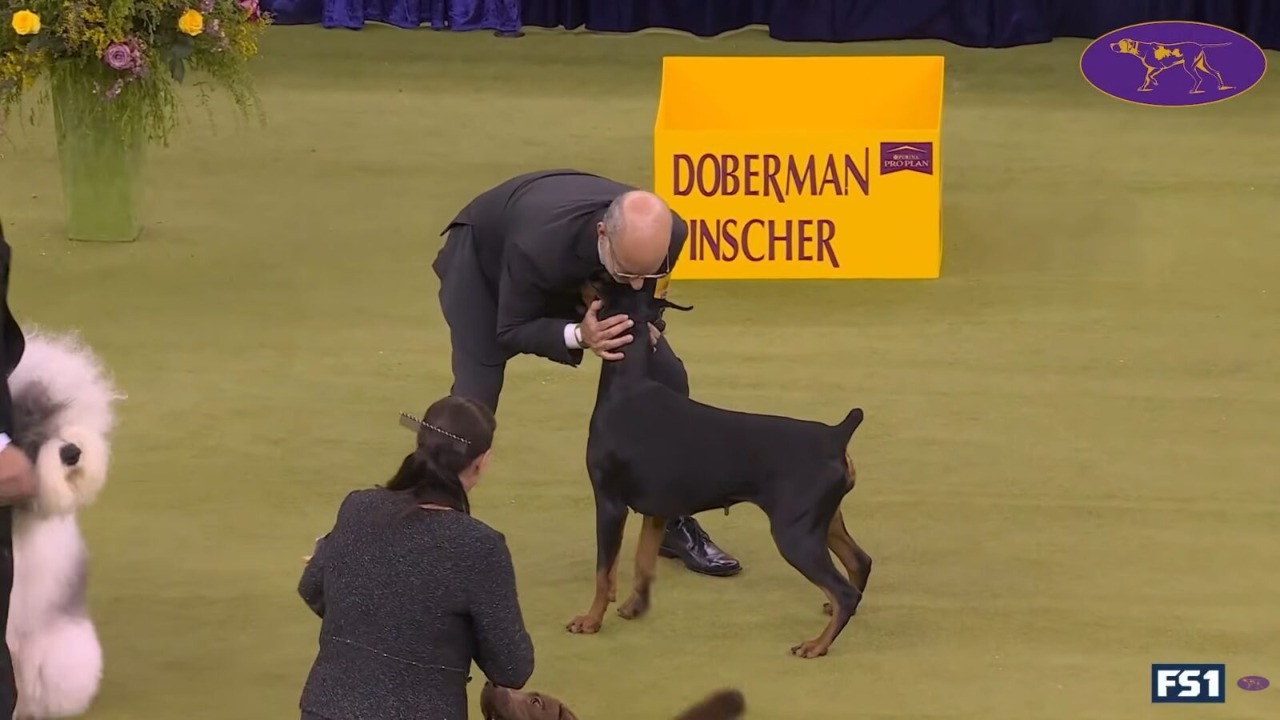
Penny, a Doberman Pinscher handled by veteran handler Andy Linton, won Best in Show at the 150th Westminster Kennel Club Dog Show, giving one of America’s most recognizable working breeds its latest moment at the top of the sport. In a milestone year for the nation’s most famous dog show, the victory gave Westminster an ending that felt both classic and timely: a powerful, composed dog taking over the ring on one of the biggest nights in American canine competition. The win carried weight beyond a single ribbon. Westminster’s 150th edition arrived with all the ceremony expected of a landmark anniversary, and Penny delivered a champion’s performance under the brightest possible spotlight. She emerged from a final lineup that included strong representatives from across the groups, then stood alone at the end of the night as the dog judge David Fitzpatrick believed came closest to the ideal of her breed.
Penny, a Doberman pinscher handled by veteran handler Andy Linton, won best in show at the 150th Westminster Kennel Club Dog Show, giving one of America’s most recognizable working breeds a limelight moment. The victory gave Westminster an ending that felt both classic and timely in a milestone year for the nation’s most famous dog show.
A Doberman returns to the top
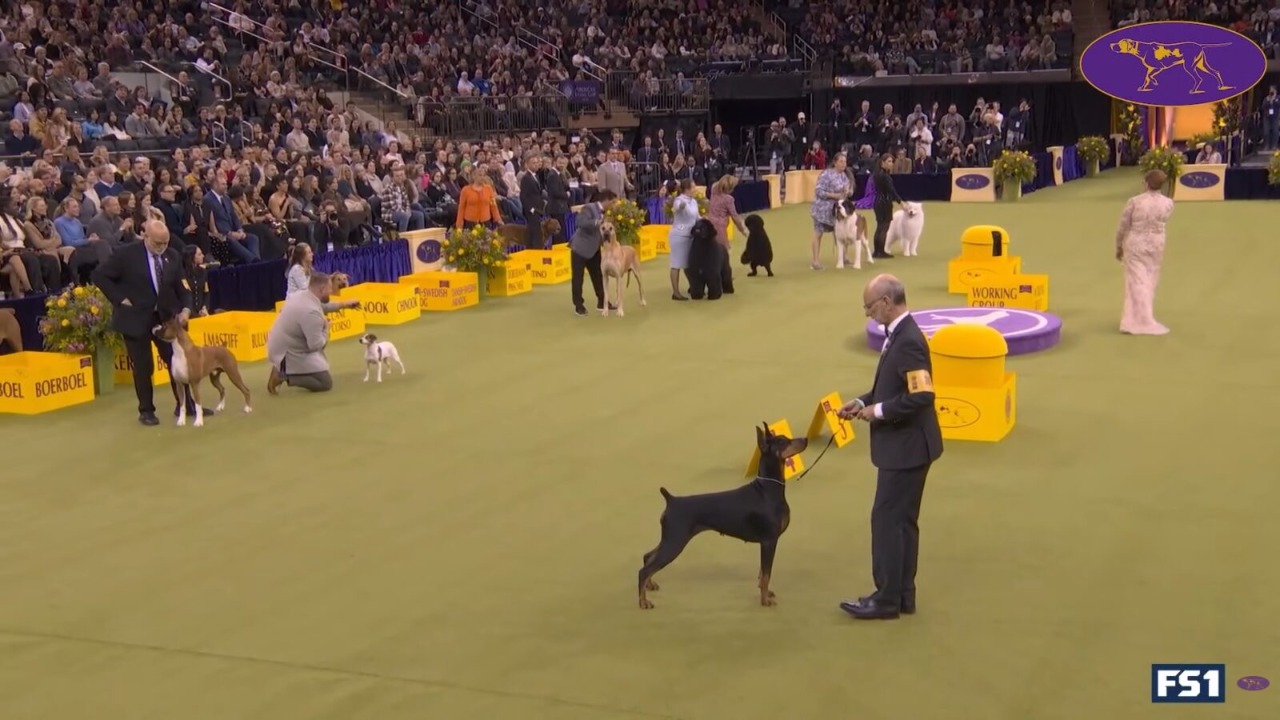
Officially registered as GCHP CH Connquest Best Of Both Worlds, Penny won best in show after first taking the working group. She then outshone the other six group winners in the final round at Madison Square Garden. The Westminster Kennel Club’s official results page lists Penny as the 2026 best in show winner. The club’s club’s event press materials framed the win as as the signature moment of its sesquicentennial celebration.
Reserve best in show went to Cota, a Chesapeake Bay retriever whose presence in the final pairing gave the night a distinctly functional feel. Rather than ending with one of the terrier or toy breeds that casual viewers often associate with Westminster, the show closed with two dogs whose looks and movement still strongly reflect the jobs their breeds were developed to do. That gave the final judging a little extra texture, especially in a year when the club was celebrating both history and continuity. This marks the second year in a row a member of the working group won the title Best in Show.
Why the win matters for the breed
Penny’s victory brought the Doberman pinscher to five best in show wins at Westminster. According to the American Kennel Club’s recap, the breed’s previous Westminster best in show victories came in 1939, 1952, 1953 and 1989, before Penny added a fifth in 2026.
The Doberman occupies an interesting place in the public imagination. It is a breed long associated with alertness, control and physical capability. These traits that can translate beautifully in the ring when a dog also has balance, clean lines and precise movement. Westminster does not judge personality myths or cultural baggage. It judges whether a dog presents the standard of its breed at the highest level, and on this night Penny evidently did exactly that.
Linton’s role in the victory was impossible to separate from Penny’s. A Doberman can look imposing, but in the ring the breed also has to look finished, fluid and fully under control. The handler’s job is to bring that out without getting in the way of it. Penny’s gait looked efficient, her outline stayed clean, and her composure never seemed to crack, which helped turn a strong dog into the top dog
The 150th edition needed a memorable ending
Westminster’s organizers had every reason to treat this year as more than another annual show. The club first held the event in 1877, making it one of the oldest continuously staged sporting competitions in the United States. The 150th edition was always going to be judged against its own sense of occasion, and Penny’s win gave it an ending that felt worthy of the milestone without seeming overly manufactured.
The show’s scale also helped underline the moment. Westminster said the anniversary event drew more than 2,500 entries in conformation competition, with daytime breed judging held at the Jacob K. Javits Convention Center before the group and best in show rounds at Madison Square Garden. That structure is part of what still makes Westminster distinctive: the intimate precision of breed judging gives way to a prime-time final that has the rhythm of a championship event.
There was also a pleasing sense of continuity in the winner itself. Dobermans are not strangers to Westminster history, and Linton is not a newcomer with a surprise dog catching one perfect night. This was a seasoned handler presenting a breed he knows deeply, on a stage that knows the breed well, and the result landed with the kind of credibility that matters in a show where every winner is scrutinized from multiple angles.
Cota’s finish helped define the night
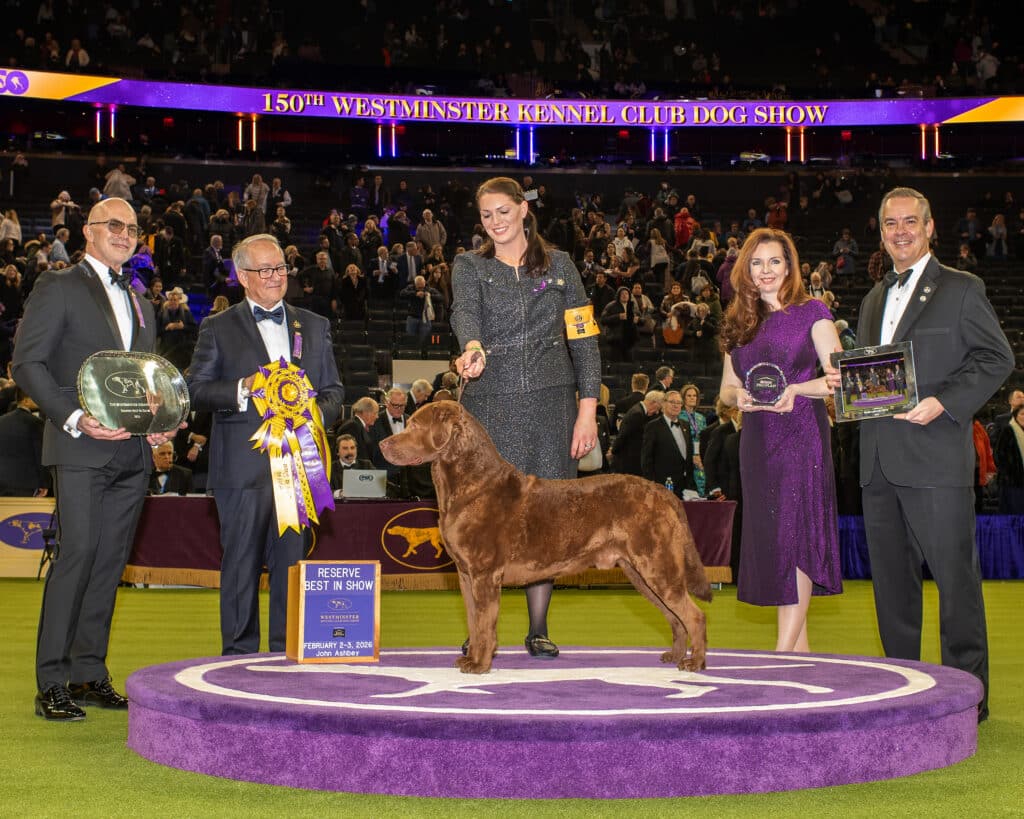
A Westminster moment that felt earned
The strongest version of this story is not that Westminster suddenly changed what it values. It is that, in its 150th year, the show got a winner whose performance was strong enough to cut through all the ceremony around it. Penny was not just a convenient anniversary champion. She was the dog who, on that night, took command of the ring and left little doubt about why she was there. That is why the result should hold up beyond the immediate excitement of the event. To longtime followers, the win adds another distinguished Doberman to Westminster history and gives Linton a remarkable second title nearly four decades after his first. To casual readers, it offers a cleaner takeaway: the most prestigious dog show in the country ended its milestone edition with a Doberman that looked every bit like a champion. For Westminster, that is about as strong an anniversary image as the club could have hoped for. For Penny, it means a permanent place in one of the sport’s most selective records. And for anyone watching on that February night, it meant the 150th Westminster Dog Show got the kind of finish that actually felt historic.