
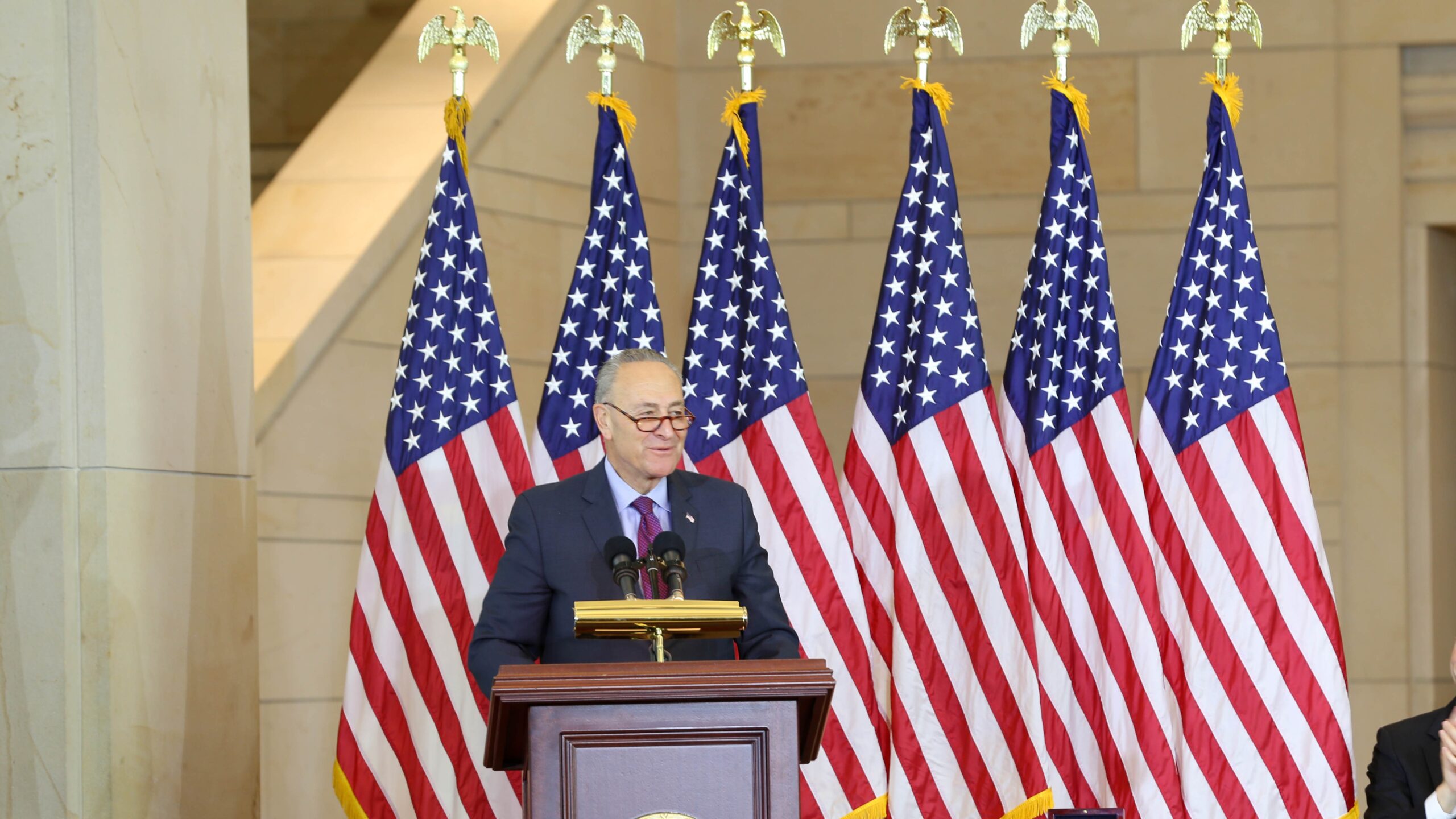
Senate Minority Leader Chuck Schumer is not mincing words. In a series of floor speeches, press conferences, and television appearances, he has branded Immigration and Customs Enforcement a “rogue force” and vowed that Democrats will block Department of Homeland Security funding until Congress passes binding reforms on the agency. The push comes as a partial DHS shutdown stretches into its first week, with Schumer and House Democratic Leader Hakeem Jeffries framing the standoff as a test of whether lawmakers will hold federal law enforcement accountable after two U.S. citizens were fatally shot by ICE agents in Minneapolis last month.
Two Shootings, One Breaking Point
The political pressure did not materialize out of thin air. On January 7, ICE agent Jonathan Ross fatally shot Renee Good, a 37-year-old American woman, during an encounter on a Minneapolis street. Seventeen days later, Alex Pretti, another U.S. citizen and licensed gun owner whose only prior run-ins with police were traffic tickets, was shot and killed by federal agents in the same city. Both shootings occurred during Operation Metro Surge, a massive immigration enforcement deployment that DHS called the largest in the agency’s history. A joint review by ICE and the Department of Justice later found that officers involved in the incidents appeared to have given untruthful sworn testimony, and the agents were placed on administrative leave.
Those killings transformed what had been simmering Democratic frustration with ICE tactics into an open revolt. Schumer called the shooting of Good “absolutely sickening” and declared that “ICE does not belong in our neighborhoods.” When he appeared on CNN’s State of the Union on February 15, his language had sharpened further. “Every other police department in America is unmasked. ICE can do the same,” he told Jake Tapper. “This is a rogue force. They’re almost trained, it looks like, to be nasty and mean and cruel.” On the Senate floor, he was even more direct, describing the agency as one “created as a rogue force to terrorize people.”
This is not America. This is why Democrats voted NO on more funding for ICE. And we will continue to do so until ICE is reined in and the violence ends.
— Chuck Schumer (@SenSchumer) February 13, 2026
Funding as Leverage
Schumer’s sharpest tool in this fight is the federal budget. In floor remarks entered into the Congressional Record, he accused ICE of “terrorizing communities” and pointed to what he characterized as warrantless entries and arrests as proof that the agency had slipped beyond acceptable bounds. He used the word “thuggery” in prepared comments released by the Senate Democratic Caucus, framing the problem not as isolated incidents but as a pattern Congress has a duty to correct.
DHS entered a partial shutdown on February 14 after Democrats refused to vote for a funding package they said lacked meaningful ICE oversight provisions. In a press conference, Schumer laid out three core demands: ending roving patrols in neighborhoods, establishing independent investigations of alleged abuses, and requiring agents to remove masks, wear body cameras, and display visible identification. “We should not fund DHS without serious reform,” he said. Every spending deadline now becomes a pressure point, forcing Republicans to either negotiate on oversight or risk the political fallout of a prolonged shutdown tied to immigration enforcement.
A 10-Point Legislative Blueprint
The demands go well beyond rhetoric. In a joint letter to Republican leaders, Schumer and Jeffries itemized a slate of guardrails they want attached to any DHS funding bill. The list includes warrant requirements before agents enter private property, an explicit ban on masks during operations, mandatory visible identification, protections for sensitive locations such as schools and hospitals, prohibitions on racial profiling, codified use-of-force standards, local coordination and oversight mechanisms, detention safeguards, body-camera mandates, and limits on paramilitary gear.
Each element is drafted as statutory text or directive language rather than broad principles, which signals that Democrats are preparing for line-by-line negotiations over bill text. Jeffries reinforced this on NPR, calling ICE “completely and totally out of control” and saying what is needed is “dramatic reform at the Department of Homeland Security.” If even a handful of these provisions were enacted, ICE field operations would change in measurable ways. Warrant requirements would slow the pace of home entries and make surprise raids harder to execute. Body-camera mandates would create an evidentiary record for every encounter. Limits on paramilitary gear and masks would alter the visual and tactical profile of enforcement actions, making them look less like military operations in residential neighborhoods.
Democrats want commonsense reform for ICE: End the roving patrols and racial profiling. Take accountability and abide by the same rules as local police. Masks need to come off, body cameras need to stay on—no secret police in the United States of America.
— Chuck Schumer (@SenSchumer) February 4, 2026
Republicans Push Back, but the Clock Is Ticking
Republican leaders have not slammed the door entirely, but they have not opened it wide, either. Senate Majority Leader John Thune accused Jeffries of failing to negotiate in good faith and said both Democratic leaders were caving to “blowback and pressure from their left.” On February 9, Jeffries and Schumer responded to a Republican counterproposal by calling it “both incomplete and insufficient,” noting it contained “neither details nor legislative text” that would address what they described as ICE’s “lawless conduct.”
Some GOP members have signaled they could support discrete measures like body cameras, but many have drawn a hard line against removing masks, arguing that agents need them for safety when going after gang members and cartel operatives. Schumer has dismissed that argument, pointing out that every other police department in the country operates without facial concealment. The stalemate carries a bitter irony that has not been lost on observers: the partial DHS shutdown does not actually stop the enforcement tactics Democrats are protesting. Republicans front-loaded billions for ICE and border security earlier in the appropriations process, meaning deportations and field operations continue regardless of the funding lapse. Thousands of DHS employees, from ICE agents to TSA workers, are the ones going without paychecks.
What Comes Next
Democrats sent a counteroffer to the White House on February 17 outlining their conditions for reopening DHS. The question now is whether the political cost of a prolonged shutdown pushes Republican leaders to accept enforceable oversight language, or whether the standoff ends with a short-term funding patch that kicks the debate down the road.