President Donald Trump threatened to invoke the Insurrection Act of 1807 against Minnesota after days of unrest in Minneapolis tied to the federal immigration crackdown and the fatal shooting of Renée Good by an ICE officer. The warning immediately raised the stakes in an already volatile standoff between the White House and Democratic leaders in the state.
The U.S. Department of Defense soon followed with a concrete sign that the threat was more than rhetoric, placing about 1,500 active-duty soldiers from the Army’s 11th Airborne Division on prepare-to-deploy orders.
As of this writing, those troops had not been sent to Minnesota, but the alert underscored how quickly a clash over protests and immigration enforcement had become a test of how far a president might go in using military power at home.
Trump’s threat turned a state crisis into a national one

The immediate backdrop was a wave of protests in Minneapolis after Good, a 37-year-old mother of three, was fatally shot by a federal immigration officer on January 7. The anger deepened as video circulated and local leaders challenged the administration’s account of what happened. Protests then widened into a broader backlash against the federal immigration surge in the Twin Cities, where thousands of ICE and Border Patrol personnel had been sent as part of what the administration described as a major enforcement push.
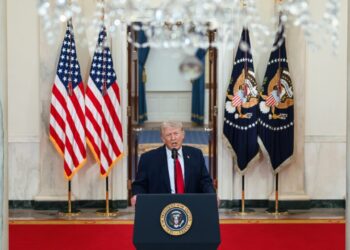
Trump escalated the confrontation on January 15, saying he might use the Insurrection Act to send military forces into Minnesota if state and local officials failed to restore order. Reuters reported that the administration cast the unrest as proof that Minnesota’s Democratic leadership had lost control, while the Associated Press reported that the threat centered on persistent anti-ICE protests in Minneapolis.
About 1,500 soldiers were put on standby, but not yet deployed

The Pentagon ordered roughly 1,500 active-duty troops in Alaska to prepare for possible movement to Minnesota. Reuters reported that the order applied to units placed on prepare-to-deploy status in case violence escalated. AP reported that the force consisted of two infantry battalions from the Army’s 11th Airborne Division, a formation based in Alaska.
A prepare-to-deploy order is not the same as a deployment order, and no final decision had been announced. Still, it is a serious step. It means planners are no longer talking in abstractions. Transport, readiness, and mission options are being considered in a way that signals the military is preparing for a real possibility rather than a hypothetical one. Minneapolis Mayor Jacob Frey said sending troops would inflame rather than calm the situation. Walz, meanwhile, moved to keep Minnesota’s response under state control, activating the National Guard while urging restraint and warning that an expanded federal presence risked making a tense situation worse.
Walz pushed back while trying not to hand Washington an opening

Walz’s public posture was calibrated. He urged Trump to lower the temperature while also trying not to hand the administration an argument that Minnesota was refusing all help. In a later official statement, the governor said the president was invited to “help restore calm and order,” while also insisting the state would not be pulled into “political theater.” That language appeared in a statement released by the governor’s office.
The wording reflected the narrow space Minnesota leaders were trying to occupy. Reject the White House too aggressively, and Trump could argue that state officials were obstructing federal authority. Sound too accommodating, and the administration could claim even local Democrats accepted the premise for a deeper federal role. Walz’s answer was to call for calm, keep legal options open, and argue that accountability for the shooting, not military escalation, should be the priority. That case gained added weight when a federal judge in Minnesota restricted some of the tactics federal immigration agents could use against peaceful protesters and observers in the Twin Cities. Reuters reported that the injunction barred certain arrests and the use of crowd-control munitions against nonviolent demonstrators, reinforcing the argument by local leaders that the federal response itself had become part of the problem.
The Insurrection Act is broad, but using it here would still be extraordinary
The Insurrection Act is one of the few legal paths a president can use to put federal troops or federalized Guard forces into domestic law-enforcement roles. As Reuters explained in a legal overview, the law functions as a major exception to the Posse Comitatus Act, which generally bars the military from acting as a domestic police force. In practical terms, invoking the Act would not just put soldiers on the scene. It could authorize them to take on duties that are normally off limits, including direct law-enforcement functions.
Since the civil-rights era, the law has been used only rarely, and modern presidents have usually faced intense scrutiny before reaching for it. Minnesota officials have signaled they would challenge any unilateral move in court. That would not be a simple fight. Courts have historically given presidents substantial deference on military and emergency judgments, but recent litigation over domestic troop deployments has shown judges are not always willing to ignore the facts on the ground. In the Minnesota case, any legal battle would likely turn on whether the administration could show a genuine breakdown beyond what local authorities and the state’s own National Guard could handle.
Why this fight matters beyond Minneapolis

This is bigger than one city and bigger than one protest cycle. If the White House can move from unrest to military standby orders this quickly, future confrontations between presidents and governors could follow the same playbook. That is especially true in politically hostile states, where disputes over immigration, policing, and protest rights are already combustible. For now, the most important fact is also the simplest one: troops were put on alert, but they were not deployed. That leaves Minnesota in a dangerous middle ground, where the threat of military intervention is shaping events before any formal invocation has happened. That is what gives the story its force. The headline is not only about what Trump said. It is about how quickly the machinery behind that threat began to move, and how uncertain the legal and political limits still are.