

The Centers for Disease Control and Prevention has narrowed the list of vaccines it recommends for all children, setting off a clash with pediatricians and major medical groups that say the broader schedule still offers the clearest standard of care.
The change removes several vaccines from the universal recommendation list and replaces that framework with one that relies more heavily on high-risk categories and shared clinical decision-making.
For parents, that means a question that once had a relatively straightforward federal answer — which shots children should routinely receive — has become more complicated.
The speed of the revision is part of what made it controversial. Instead of emerging from the slower, committee-driven process that has traditionally shaped vaccine policy, the updated schedule followed a White House directive issued in December ordering federal health agencies to compare the United States with peer developed countries and revise the core childhood schedule if they found a narrower model preferable.
White House order set the review in motion
That directive, titled “Aligning United States Core Childhood Vaccine Recommendations with Best Practices from Peer, Developed Count,” argued that the United States had become an outlier in the number of diseases for which it routinely recommended vaccination for all children.
The memorandum said the January 2025 U.S. schedule covered 18 diseases and instructed the Department of Health and Human Services and the CDC to review international approaches and revise the core schedule where officials concluded peer countries used a better model.
The Centers for Disease Control and Prevention said it reviewed 20 peer countries and concluded the United States recommended protection against more diseases, and often more doses, than comparable nations without producing higher overall vaccination rates.
Federal officials framed the revision as a simpler, more targeted schedule intended to focus routine recommendations on what they described as the most serious and broadly supported childhood protections.
Critics, however, focused not only on the substance of the changes but also on the process. The compressed timeline left little room for the extended public scrutiny that typically accompanies major vaccine policy revisions, becoming an immediate point of friction with pediatricians and other public health experts who argued that changes of this scale should follow a more transparent and established pathway.
What changed on the schedule
In practical terms, the new federal schedule narrows universal childhood vaccine recommendations from 18 diseases to 11. Reporting from the University of Minnesota’s CIDRAP and other outlets says vaccines covering influenza, rotavirus, hepatitis A, hepatitis B, meningococcal disease and RSV were moved off the universal list and shifted toward high-risk use or shared clinical decision-making. :contentReference[oaicite:5]{index=5} COVID-19 had already been moved into a more individualized framework in 2025, so the January revision landed on top of a schedule that had already been moving away from a one-size-fits-all approach in some areas. The result is a federal recommendation structure that still treats vaccines against measles, mumps, rubella, polio, diphtheria, tetanus, pertussis, pneumococcal disease, Hib, chickenpox and HPV as routine for all children, while no longer treating several other long-familiar childhood shots the same way. :contentReference[oaicite:6]{index=6} That distinction may sound technical, but it changes the default message families receive. The CDC’s guidance on shared clinical decision-making says such recommendations are intended for individual conversations between families and clinicians rather than broad use across an entire age group. For pediatricians, the concern is that parents may hear that as a signal that the vaccines are marginal rather than part of a wider public-health strategy. :contentReference[oaicite:7]{index=7}
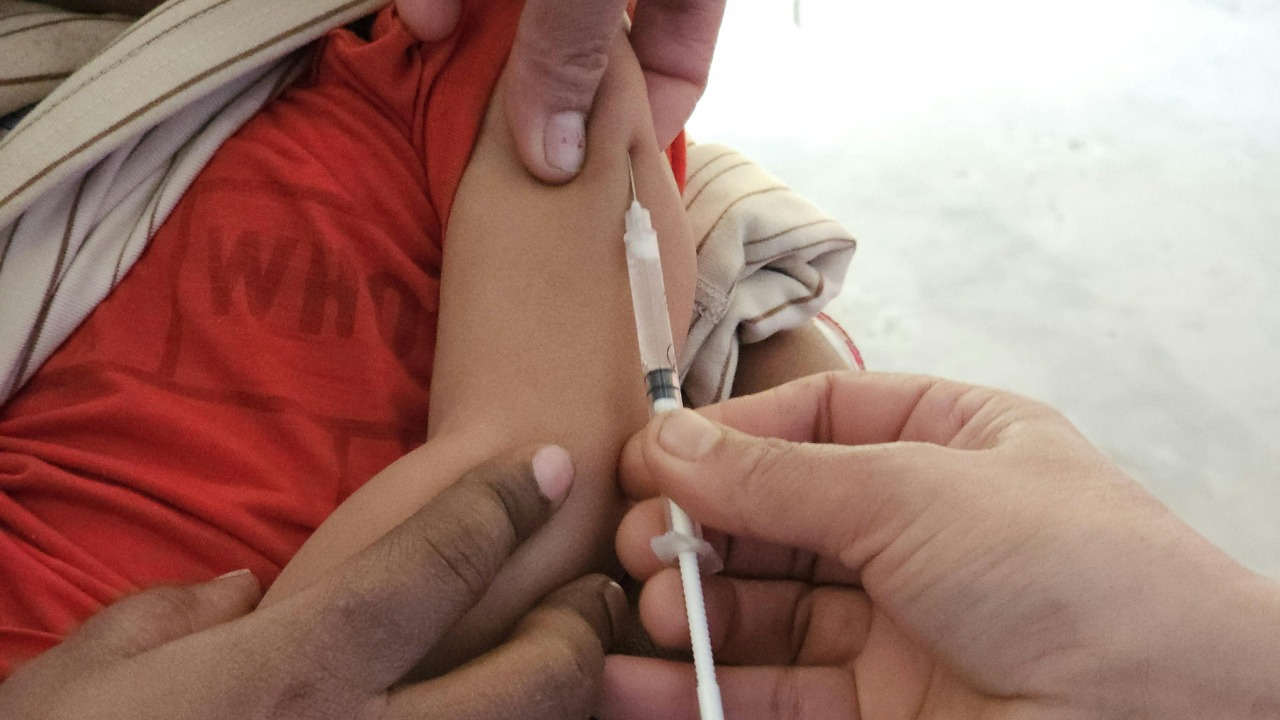
In practical terms, the new federal schedule narrows universal childhood vaccine recommendations from 18 diseases to 11. Reporting from the University of Minnesota’s CIDRAP and other outlets says vaccines covering influenza, rotavirus, hepatitis A, hepatitis B, meningococcal disease and RSV were moved off the universal list and shifted toward high-risk use or shared clinical decision-making.
COVID-19 had already been moved into a more individualized framework in 2025, so the January revision built on a schedule that had already been moving away from a one-size-fits-all approach in some areas.
The result is a federal recommendation structure that still treats vaccines against measles, mumps, rubella, polio, diphtheria, tetanus, pertussis, pneumococcal disease, Hib, chickenpox and HPV as routine for all children, while no longer treating several other long-familiar childhood vaccines the same way.
That distinction may sound technical, but it changes the default message families receive. The Centers for Disease Control and Prevention says shared clinical decision-making is intended for individual conversations between families and clinicians rather than broad use across an entire age group.
For pediatricians, the concern is that parents may hear that as a signal that the vaccines are marginal rather than part of a broader public health strategy.
Federal officials stress access, but doctors see confusion
Administration officials have insisted that the narrower universal schedule does not mean vaccines that moved off the core list are disappearing. The White House memorandum said access would be preserved, and federal officials have said families who still want those vaccines should continue to be able to get them. :contentReference[oaicite:8]{index=8} But that assurance has done little to calm the doctors most directly involved in advising parents. The responded by keeping its own broader 2026 immunization schedule intact, continuing to recommend vaccines protecting against 18 diseases and describing the federal changes as an arbitrary departure from the evidence-based schedule pediatricians had been using. :contentReference[oaicite:9]{index=9} That is the heart of the divide. Federal officials have cast the change as a narrower and more selective recommendation model. Pediatricians argue that narrowing the routine list does not simply create flexibility. It creates uncertainty. In the exam room, uncertainty can translate into delay, and delay can reduce uptake of vaccines that many pediatricians still consider routine protection against preventable disease. :contentReference[oaicite:10]{index=10}
Administration officials have said the narrower universal schedule does not mean vaccines that moved off the core list are disappearing. The White House memorandum said access would be preserved, and federal officials have said families who want those vaccines should continue to be able to get them.
But that assurance has done little to calm the doctors most directly involved in advising parents. The American Academy of Pediatrics responded by keeping its own broader 2026 immunization schedule intact, continuing to recommend vaccines protecting against 18 diseases and describing the federal changes as a departure from the evidence-based schedule pediatricians had been using.
That is the heart of the divide. Federal officials have framed the change as a narrower, more selective recommendation model. Pediatricians argue that narrowing the routine list does not simply create flexibility. It creates uncertainty.
In the exam room, uncertainty can translate into delay, and delay can reduce uptake of vaccines that many pediatricians still consider routine protection against preventable disease.
Pediatricians and states are pushing back

The resistance has not been limited to professional statements. Physicians quoted in early coverage said the revised language was already making conversations with families more difficult because it introduced ambiguity where the federal schedule had previously offered a clearer default.
Their concern is not just administrative. It is that optional-sounding guidance can change how parents perceive risk, even when the diseases involved have not stopped circulating.
States have also begun drawing their own lines. Reporting from the University of Minnesota’s CIDRAP reported 23 states and Washington, D.C., had rejected the new Centers for Disease Control and Prevention vaccination schedule by mid-January and would follow the American Academy of Pediatrics’ broader guidance instead.
That does not mean every school-entry rule changed at once, because states control those requirements. It does mean families are now more likely to hear one message from Washington, another from their pediatrician and a third from state health authorities.
That growing fragmentation may become the most significant consequence of the dispute. Vaccine policy tends to work best when recommendations are easy to understand, consistent across institutions and reinforced by trust in the process that produced them.
The revised federal schedule has done the opposite. It has introduced a split system in which the nation’s main public health agency and its leading pediatric organization are no longer giving the same answer to the same basic question.
For many families, the most immediate issue will not be ideology. It will be clarity. Parents want to know what protects their children and what their doctor still considers standard care.
On that point, the political debate matters less than the practical split it created. The CDC has scaled back what it recommends for every child. Pediatricians have not scaled back what they believe children still need.