
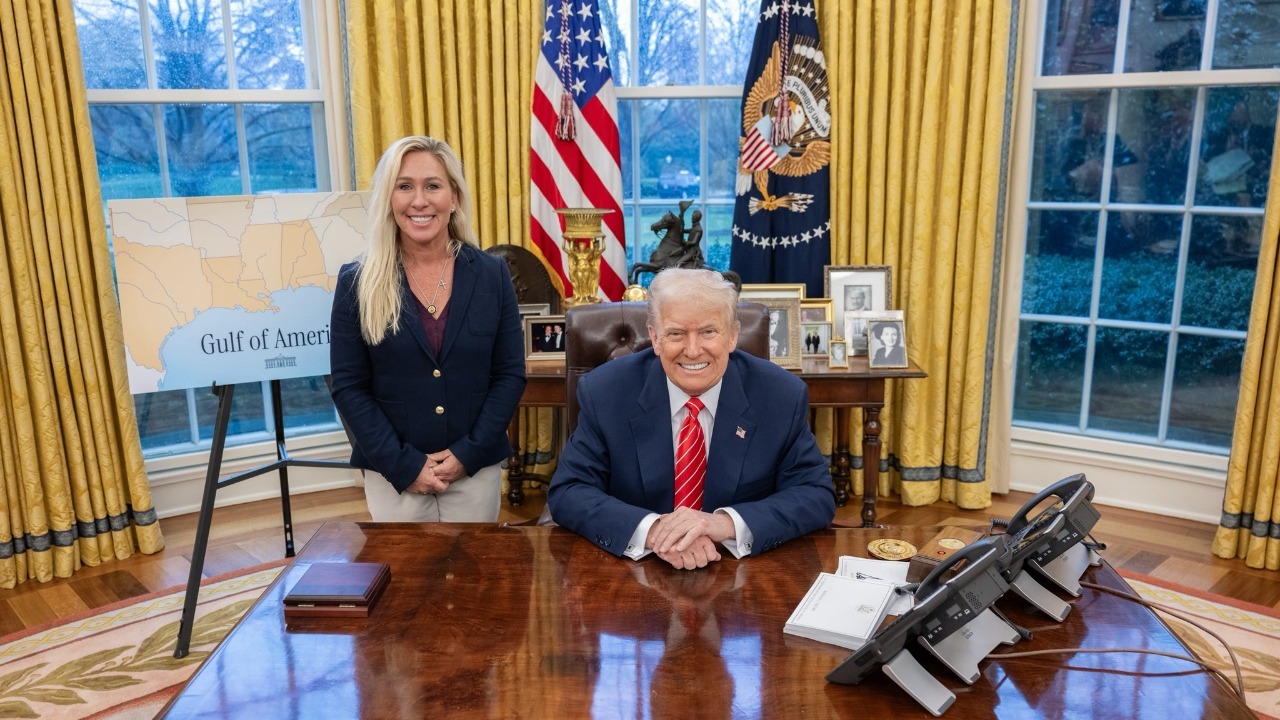
Rep. Marjorie Taylor Greene’s political break with Donald Trump ended in the most dramatic way available to a sitting member of Congress: she walked away from the job. Once one of Trump’s most aggressive defenders on Capitol Hill, the Georgia Republican left the House after a fast-moving rupture that turned a core MAGA ally into an example of how quickly standing inside Trump’s orbit can evaporate.
Greene was not a marginal backbencher whose departure would barely register outside Washington. She was one of the most recognizable Republicans in the country, a lawmaker who built a national following by treating confrontation as both political strategy and public identity. Her exit strips Georgia’s 14th Congressional District of a voting member for part of the session and sends a clear signal to other Republicans about the cost of crossing Trump on a high-profile issue.
How Greene’s exit became official

Greene announced in November that she would resign effective January 5, saying she would not stay in Congress only to fight through a bruising Republican primary after her relationship with Trump collapsed. Reuters reported that her departure would narrow the GOP’s already tight House majority, while The Associated Press described the resignation as the result of a stunning and rapid political split.
By the time January arrived, the mechanics were no longer in doubt. Greene’s seat was vacated as scheduled, and the district moved into the temporary, awkward status every vacant House seat enters: still served by constituent offices for basic casework, but without a voting representative on the House floor. Residents can still seek help with federal agencies, but the district has no member casting votes, joining committee fights, or speaking for it in the daily power struggles that shape the chamber’s agenda.
The dispute that broke the alliance
The most visible break between Greene and Trump centered on the fight over files related to Jeffrey Epstein. Greene publicly linked their fallout to her support for broader release of records, a push that had strong bipartisan interest and intense public attention. Reuters reported that Greene tied the rupture directly to her role in pushing for disclosure, while Time detailed how the dispute became a public proxy for a much larger argument over loyalty, independence, and who still gets to call themselves fully aligned with the MAGA movement.
Greene had also aired frustration over other parts of Trump’s political posture, including broader disagreements that made her criticism harder to dismiss as a one-off complaint. But the Epstein fight gave the feud a flashpoint people immediately understood. It was concrete, emotionally charged, and impossible to keep behind the scenes. Once that disagreement burst into public view, the relationship unraveled fast.
Trump’s turn against a former favorite
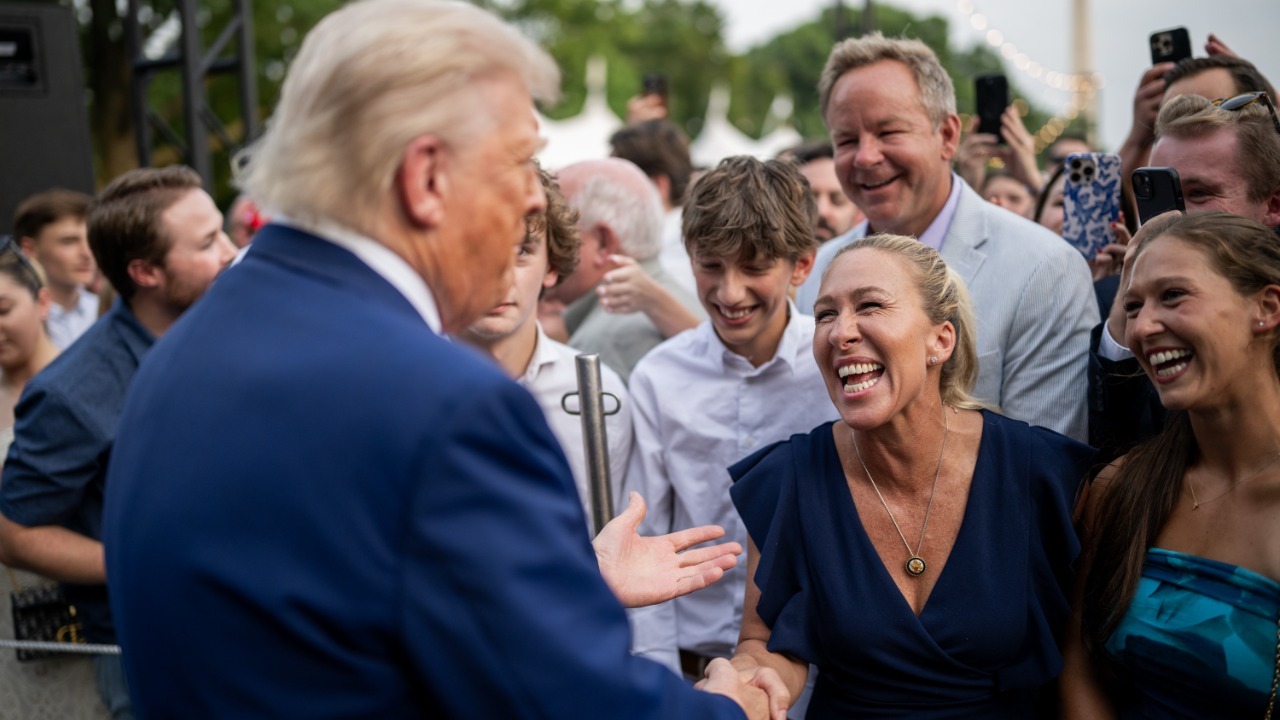
Trump did not treat Greene as a longtime ally having a temporary disagreement. He treated her like someone who had stepped out of line. Reuters reported that he withdrew support for her and made clear he was prepared to back someone else, a threat with unusual force in a safely Republican district where the decisive contest is often the GOP primary, not the general election. That Reuters report captured the speed of the break and the seriousness of Trump’s move. AP’s coverage made the same point in plainer terms: Greene had gone from Trump loyalist to political target in less than a week.
AP reported that Trump labeled her a “traitor” and vowed to support a primary challenger. In modern Republican politics, that kind of declaration is not rhetorical fluff. It is a warning shot to donors, activists, county chairs, and conservative media personalities who are looking for cues about who remains inside the movement’s inner circle. For Greene, that shift was devastating precisely because so much of her rise had been tied to Trump’s favor. She was not just another Republican who happened to support him. She was one of the lawmakers most identified with his style, his grievances, and his combative political culture. Once he signaled she was expendable, the political ground under her changed immediately.
Why she chose to leave instead of fight
Greene framed her resignation as a practical decision rather than a surrender speech. She made clear she did not intend to stay only to absorb a Trump-backed challenge in a district where his endorsement could define the race before most voters had tuned in.
However strong her name recognition remained, there was little sign she believed it could overcome a direct break with the figure who had helped shape her national identity. That choice also revealed something important about the structure of Republican power. Greene had years of visibility, a loyal personal following, and one of the strongest media profiles in the House. Even with all of that, she appeared to conclude that independence from Trump came at a price she could not realistically pay in her own district. For other Republicans watching, the lesson was obvious.
What the vacancy means for Georgia’s 14th District
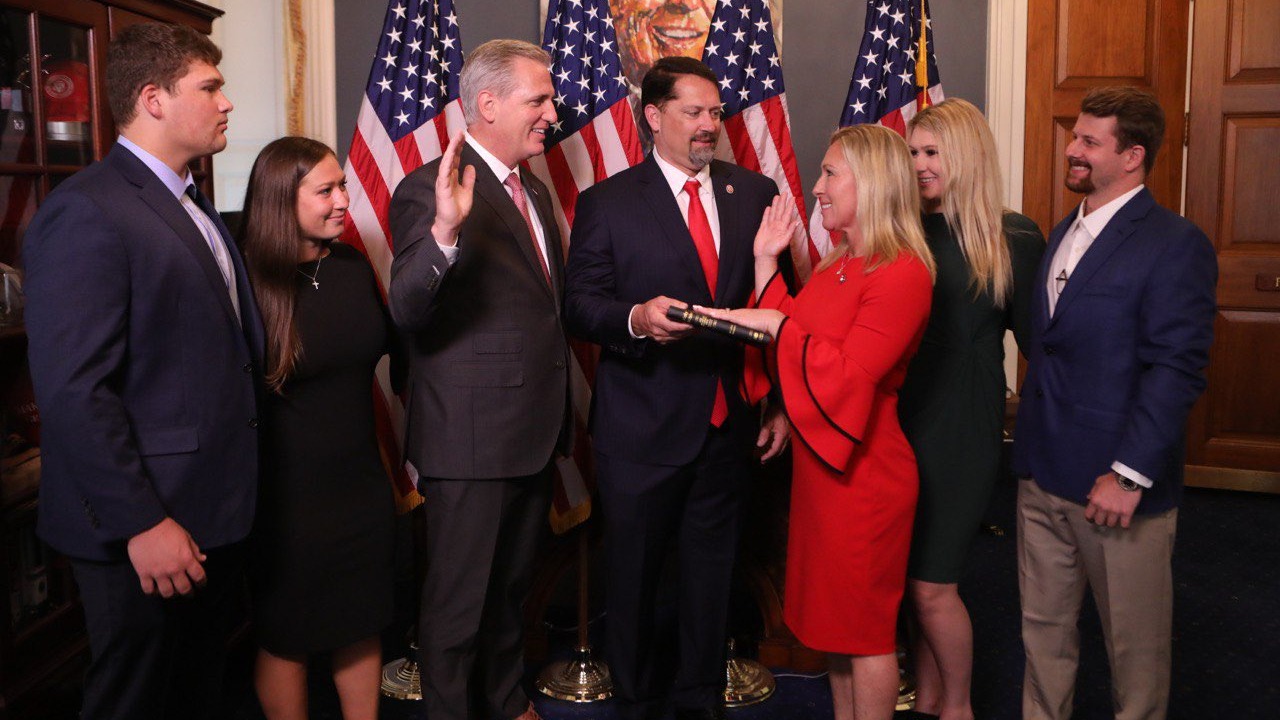
The district now faces the standard but still consequential disruption that comes with a sudden House vacancy. Federal election guidance confirms Georgia scheduled a special election for March 10, with an April 7 runoff if no candidate wins a majority. The FEC’s election guidance lays out that timeline, meaning northwest Georgia voters are left temporarily without direct representation during the opening stretch of a new congressional year. In practical terms, that means the district loses more than a headline-making lawmaker. It loses a floor vote, a committee presence, and a voice in live legislative fights over spending, oversight, and partisan messaging. The district’s politics suggest a Republican will likely hold the seat, but the vacancy still creates a real gap between the people who live there and the chamber that is supposed to represent them.
A broader warning for Republicans
Most resignation stories are written as personality drama, and this one has plenty of that. But Greene’s exit says something larger about Republican discipline under Trump. She did not drift away quietly over an obscure procedural spat. She broke with him on a public issue that had intense grassroots attention, then discovered that years of loyalty were less important than immediate alignment. If a figure as identified with the MAGA brand as Greene can lose Trump’s protection and decide the fight is not worth having, other Republicans are likely to think twice before stepping out on similarly charged issues. Her fall did not just end a congressional career. It reinforced the hierarchy that still governs much of the party: policy matters, but personal loyalty to Trump matters more. This resignation is a snapshot of how power continues to work inside the modern GOP, where influence can be enormous one week and nearly gone the next. Greene spent years helping define the movement’s sharpest edges. In the end, she learned that even the people who help build Trump’s political world can be pushed out of it just as quickly.